Quality and reliability are built-in to our custom engineered solutions...
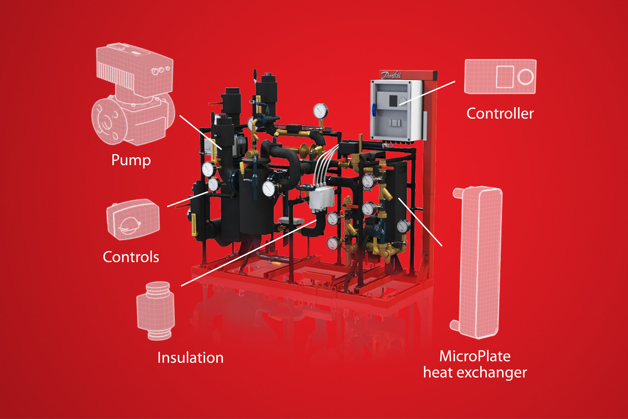
At Danfoss, we develop, design & produce all major components for our custom energy transfer stations in-house. Our wide experience in designing and installing district energy systems spans over 80 years ensuring your solution will meet all applicable technical, user, safety, efficiency and installation requirements.
Avoid the hassle of building on-site solutions, while eliminating any additional consulting engineer investments to focus on what matters; optimized heat transfer & superior system control, performance, & efficiency.
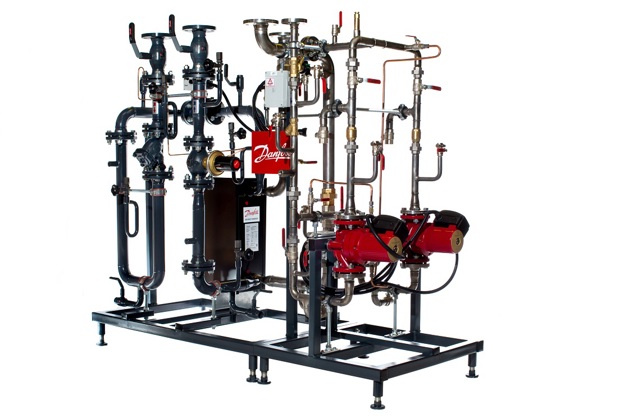
A complete solution delivered by one trusted and local supplier
Danfoss is bringing extensive energy transfer station expertise to the local North American market, by supplying USA factory designed and installed units, enabling us to uniquely ensure system uptime and performance, while also easily facilitating code compliance, efficiency optimization, startup and commissioning support assistance.
Danfoss utilizes a robust requirement collection process to tailor-fit the perfect solution for your situation. Pressure, differential pressure, temperature & flow are integrated & automatically controlled in all stations, allowing building occupants to always be comfortable.

Submit an inquiry
Contact us today to learn more or complete the inquiry form to be connected to a Danfoss district energy expert.
Learn more
Products
Designed for transport
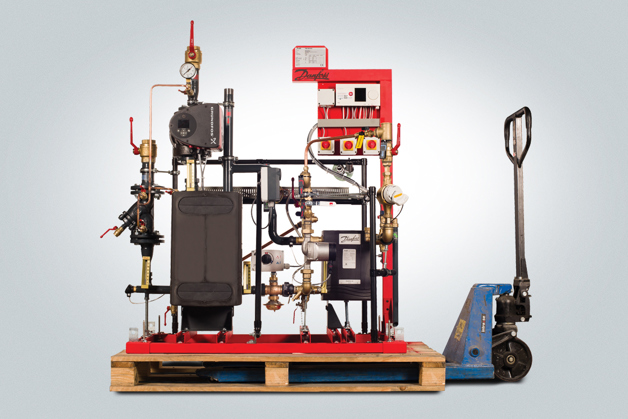
Our custom-built energy transfer stations feature a compact size and weight, and are engineered to easily transport through halls and stairways as needed, with minimum hassle.
Available both pre-assembled or split in easy to assemble modules if required due to space and height restrictions.
Industrialized production
Forget about waiting for on-site fabrication contractors. Danfoss takes pride in our professionally managed factory and production staff that offer improved quality through our rigorious control processes.
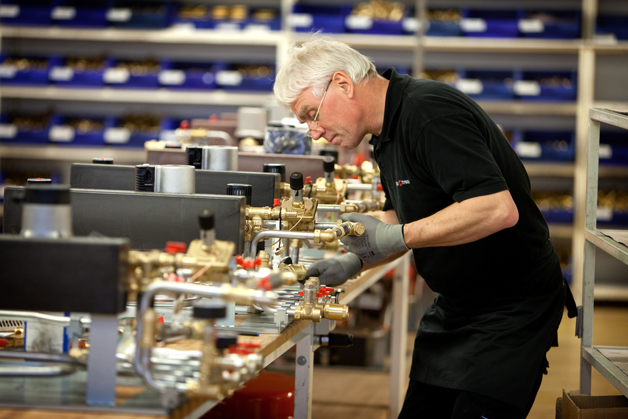
Configured for performance
Custom energy transfer stations arrive ready to run with factory configured controls. Each unit is pre-tested for function and performance and Danfoss maintains documentation on this before delivery.
In addition we maintain spare parts inventory to get you products fast, should they be needed. Our 3D drawings are archived for easy fabrication of replacement pipe network that may be needed over the lifetime of the equipment. This means often no welding is needed onsite.
Our products are also backed by the Danfoss warranty, which is typically 24 months from the service date, or 36 months from the delivery date.
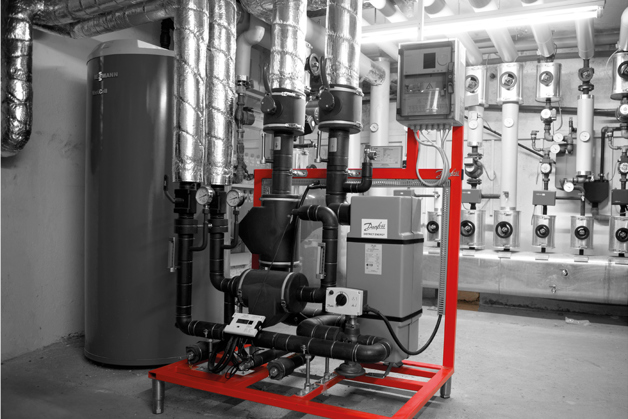
Installation, commissioning, and service support
Danfoss offers a comprehensive service support program to ensure that your new station is properly installed and commissioned. This covers all aspects of commissioning, maintenance, technical support, spares, warranties, and more.
Please contact Danfoss to inquire.

How it works
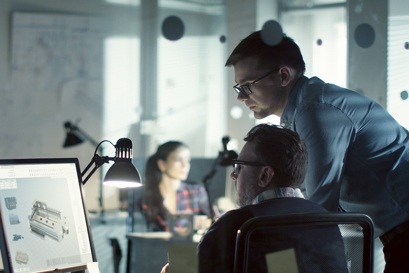
Thermal/flow requirement collection: Danfoss stations are site-specifically designed to meet the precise capacity requirements of each building. With thermal transfer design expertise, we collect critical data including inlet/outlet size, location, direction, bms interface, & more. This helps pinpoint & address any critical unknowns early in the process.
Site Survey: Danfoss helps with configuration space requirements, including minimizing electrical and pipe fitting work through planning, not neglecting the access route, etc.
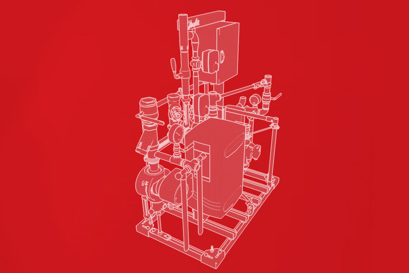
Concept drawings: Danfoss designers use the data gathered to create a concept configuration, ensuring the station will fit in designated space, and also to minimize any on-site labor.
3D digital models are than created, and made available to our customers. With customer inputs, any last refinements needed are made, before the fabrication process starts.
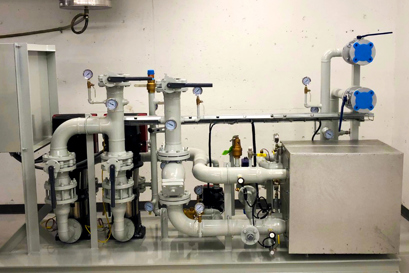
Highly engineered equipment with pre-configured controls arrives on site, ready to easily connect and ready to run.
Danfoss will help walk you through the entire process. To get started please submit an inquiry, and an application expert will be in touch shortly.
Case studies
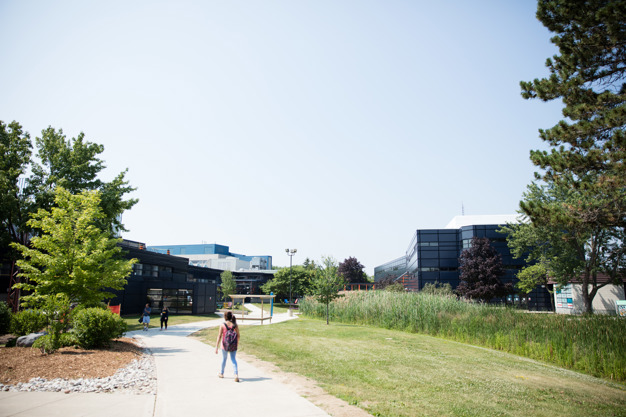
Creating a sustainable energy system to heat, cool and power an entire college campus is no easy feat. In 2013, when Sheridan College launched its Energy and Climate Master Plan, with the goal of lowering campus energy and greenhouse gas emissions by half, they realized that they would need to transform their heating and cooling system. They looked to the Trias Energetica model, first developed in 1979, as a guide to developing a sustainable energy system, integrating heating and cooling functions and recovering energy that might otherwise be wasted.
News
View related podcasts
Join our Envisioneering Exchange host, John Sheff, Danfoss’ director of public and industry affairs in North America, as he addresses the changing landscape through informative, valuable dialogue with thought leaders and experts-in-their-fields.
Episode 7 - District energy in North America
What is district energy? What is its potential for buildings, building networks/campuses, and cities in North America looking to improve efficiency, reduce greenhouse gas emissions, lower operating costs, and ensure resiliency? How is today’s technology affecting market development? Tune in to this episode for a conversation on district energy (including heating and cooling) with Jeff Flannery, Danfoss’ business development manager in North America.
Episode 8 - Advantages of district energy technology
This episode takes the discussion on district energy in Episode 7 even further — examining how technology like pre-engineered, factory-built energy transfer stations are being used today to reduce engineering costs and risks and enable “plug-and-play” operability in district energy networks in North America. Jeff Flannery, business development manager for district energy in North America, joins us to discuss a recent project at Sheridan College in Ontario, Canada.