
The energy intensity of desalination, 1.0: Thermal distillation
Distillation is a phase separation method. Heat is added to seawater, so the water vaporizes; but the salt, which has a different boiling point, doesn’t. When this water in its gas phase returns to its liquid phase through condensation, all that’s left is pure H2O.
Generating the heat to boil seawater requires much more energy than drawing water from a well or stream or collecting rainwater. That’s why for most of human history, thermal distillation of seawater was only a last resort that took place at a small scale, as when ancient mariners boiled pots of seawater and used sponges to collect the condensed steam. However, after the industrial revolution, when oceangoing ships began to use steam for power, things started to change. Throughout the 1800s marine distillation became increasingly widespread and more energy-efficient through a series of inventions, including multiple-effect evaporators, that are still in use today.
Large-scale, land-based thermal distillation began in 1928 when a 60 m3/day plant using multiple-effect distillation (MED) was installed on Curaçao. Throughout the rest of the 1900s, hundreds of other thermal distillation desalination plants were built around the world. Despite their relative energy intensity, many of these first-generation desalination plants are still in use today.
Engineers made great strides in improving the energy efficiency of thermal distillation throughout the 20th century. As the graph below indicates, three technologies play a significant role in this development. Just how efficient a given thermal distillation desalination plant is will depend on when it was built (or retrofitted) and on the type of technology employed.

Multi-stage flash (MSF): Seawater is partially evaporated (flashed) in a sequence of stages, each with its own pressure and boiling point. MSF plants operate at approximately 20 – 27 kWh/m3.
Multiple-effect distillation (MED): MED plants also consist of a series of stages, or "effects." In MED plants, each effect contains steam-heated tubes to evaporate a portion of the feed water. More energy-efficient than MSF, MED plants operate at approximately 14 – 21 kWh/m3 of distilled water.
Mechanical vapor compression (MVC): MVC plants use pressure turbines to compress water vapor to create additional heat and vapor. Employed primarily in thermoelectric and medium-sized plants, MVC is the most energy-efficient form of thermal distillation, requiring between 7 – 12 kWh/m3 of distilled water.
As seen above, the specific energy consumption of thermal distillation plants varies widely – from 7 – 27 kWh/m3, depending on the technology used.
The decrease in thermal distillation desalination energy intensity is impressive, with the most energy-efficient MVC plants using just a quarter of the energy required by the least energy-efficient MSF plants. But there was more to come. Reverse osmosis technology would soon usher in even greater energy savings.
The energy intensity of desalination, 2.0: Reverse osmosis
People have filtered water in one way or another throughout history, but reverse osmosis (RO) is different. While filters separate even very tiny particles from water, they cannot remove dissolved chemicals. Reverse osmosis does this at the molecular level by using pressure to force seawater through a semi-permeable membrane, allowing the solvent molecules, H2O, to pass through the membrane but not the dissolved salt or other contaminants. Unlike thermal distillation, RO is a physical process that involves no phase change.
Two researchers at UCLA, Sidney Loeb and Srinivasa Sourirajan, developed the first RO membrane in 1959. Six years later, the first municipal water utility to use the technology began a successful pilot program in Coalinga, California. Ever since, RO has been on a one-way trajectory of growing worldwide adaptation and increased energy efficiency driven by improvements in membrane technology, energy recovery, and high-pressure pump efficiency.
From Loeb and Sourirajan’s first cellulose acetate hollow fiber membranes to the latest thin-film composite membranes in spiral wound configurations, advances in membrane technology have played a huge role in RO’s increased energy efficiency and growing range of applications.
As the graph below shows, the specific energy consumption (SEC) of RO membranes dropped precipitously in the late 1970s with the introduction of thin-film composite technology. Since then, innovation has reduced membranes’ SEC even further, to about one-tenth of the first generations of cellulose acetate membranes. The SEC of the today’s most energy efficient SWRO plants using the best RO membranes, less than 2 kWh/m3, is close to the thermodynamic limit of 1 kWh/m3.

The other main driver of RO energy consumption is the generation of the high pressure required to force seawater through the membranes. Here, both energy recovery devices (ERDs) and pump efficiency play important roles.
Before RO with isobaric energy recovery, engineers employed several other methods to re-use the pressure remaining in the concentrate (brine) by transferring the hydraulic energy to the feed side of the membranes. These include:
- The Francis turbine: Invented in 1848 and used primarily for power production, the Francis turbine was the first attempt to recover energy in SWRO. Their energy recovery efficiency is 75-80%.
- The Pelton wheel: Another invention from the 1800s, the Pelton wheel is a turbine that extracts water’s impulse energy much more efficiently than traditional water wheels. When its modern descendants are used in SWRO, they can recover 80 - 85% of brine reject energy.
- Hydraulic turbochargers: Introduced to SWRO during the 1990s, hydraulic turbochargers direct the pressurized reject through a nozzle into a turbine connected to a centrifugal spinning impeller to boost feedwater pressure. Their energy recovery efficiency is about 90%.
Generally speaking, SWRO before the introduction of isobaric energy recovery had a specific energy consumption of 3 - 5 kWh/m3 when Pelton turbines are used, and up to 8 kWh/m3 with Francis turbines – still a significant reduction compared to thermal distillation.
The energy intensity of desalination 3.0: RO with isobaric energy recovery
The invention of isobaric energy recovery devices was another giant leap in making desalination more energy efficient. Although the first patent filings for isobaric ERD took place in the mid-1960s, it would take decades more of innovation until they started appearing in SWRO plants and became commercially successful.
Isobaric ERDs reduce the amount of flow that high-pressure pumps need to pump, enabling dramatically lower power consumption throughout the SWRO plant. Unlike their centrifugal predecessors, isobaric ERDs use positive displacement technology to reach unprecedented energy recovery efficiency – up to 98% – making SWRO plants using them 10 – 30% more efficient than plants using turbines or turbochargers and up to 60% more energy-efficient than plants without ERD.
Despite their capital cost, need for a booster pump, and issues with mixing and leaking, isobaric ERDs have been a standard component in energy-efficient SWRO plants since around 2005 - 2006. Similarly, the business case for retrofitting SWRO plants without ERD is often strong. Today, many SWRO plants built before 2005 achieve significantly lower operating costs and attractive payback times by replacing these with isobaric ERDs.
Another innovation in SWRO is axial piston high-pressure pumps, which are more energy-efficient than centrifugal high-pressure pumps. As shown in the chart below, this efficiency difference is most significant in small and medium-sized installations. The efficiency of axial piston pumps is about 20% greater than centrifugal pumps in 500 m3/d plants, but this efficiency difference falls to 4% in 10,000 m3/d plants.

In terms of specific energy consumption, the current "state of the art" for SWRO plants using isobaric ERDs, axial piston high-pressure pumps, and the latest membrane technology can now be lower than 2 kWh/m3, or less than half of what it was at the turn of the 21st century.
The energy intensity of desalination 4.0: What’s coming next?
Will the next generation of desalination technology also reduce energy consumption by half – or more? When will incremental SEC improvements in high-efficiency SWRO technologies reach the point of diminishing returns, and open the door for the next game-changing breakthroughs? It’s too early to tell, but many interesting technologies will most likely reduce the energy consumption and the carbon footprint of desalinated water even further. Here are just a few innovations we might be seeing more of soon:
- Improved membranes: Although already close to what is possible thermodynamically, membrane technology will almost certainly improve as they become even more permeable and fouling resistant.
- Better ERDs: Next-generation ERDs will likely reduce the impacts of brine-feedwater mixing and lubrication limitations. We can also expect less complexity in terms of the number of units that can be connected – as well as CAPEX and OPEX reductions over time.
- Renewable-energy driven desalination: Wind, solar, wave, and geothermal energy can all be harnessed to power desalination – and they will do so increasingly to reduce desalination’s carbon footprint. Many small-scale SWRO systems powered by renewable energy already exist, and larger plants that serve municipalities are also coming online, including the world’s biggest solar-powered SWRO plant in Al Khafji, Saudi Arabia, which produces 60,000 m3/d. The World Bank estimates that the cost of solar-powered thermal desalination will drop to as low as USD 0.90/m3 by 2050.
- Alternatives to SWRO: Although replacing high-efficiency SWRO is unlikely for years to come, several technologies, some more viable and scalable than others, may compete for a share of the growing desalination market:
- Humidification-dehumidification desalination (HDH)
- Semi-batch/Batch RO – CCRO/Batch+ brine concentration
- Forward osmosis (FO) brine concentration and FO-RO
- FO-RO hybrid
- Radial deionization (RDI)
- Desalination by freeze crystallization
The combined effects of demographic growth, climate change, and water scarcity will almost certainly increase future demand for desalinated water. However, for desalination to be part of the solution – instead of adding to the problem by increasing CO2 emissions as it increases water output – more innovation will be needed.
Related blogs

Our blog explores issues related to energy and cost efficiency in seawater reverse osmosis (SWRO). We’re investigating more topics and adding new blogs regularly.

Worldwide, seawater reverse osmosis (SWRO) capacity is growing and will continue to expand in the foreseeable future.

Although just one percent of worldwide water consumption currently derives from desalinated seawater, desalination is responsible for an outsized share of water treatment’s global energy usage.
Read more about our solutions for desalination
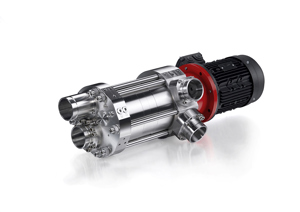
The first active ERD for medium and large plants, the MPE 70 integrates highly effective isobaric pressure exchangers with a low-voltage motor to eliminate the risk of rotor overspin, reduce mixing and biofouling, and facilitate smarter automation. Covering train sizes from 1,500 m3/day and above.
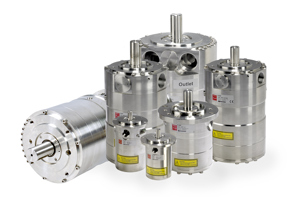
The range of high-pressure APP pumps is optimized for both landbased, off-shore and marine sea water reverse osmosis applications. Available with or without motor.
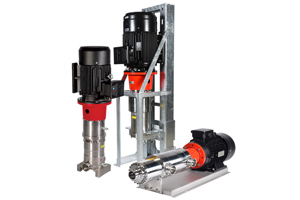
With a 3-in-1 design that integrates highly effective isobaric pressure exchangers with positive displacement booster pumps and electrical motors, active iSave® ERDs deliver big energy savings in small spaces. Covering train sizes from 200-3,000 m3/day
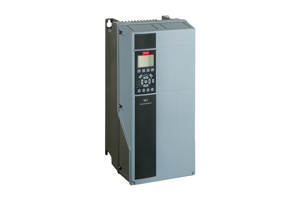
VLT® AQUA Drive FC 202 controls all types of pumps and comes equipped with a cascade controller.
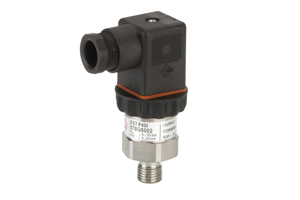
For use in corrosive environments and with aggressive media, Danfoss offers the robust DST P40I pressure transmitter made of Titanium and with ceramic pressure sensing element. DST P40I is optimized for use in applications such as desalination systems, seawater cooling, and chemical processing.
Explore our case stories

A three-train system based on APP pumps and iSave energy recovery devices from Danfoss delivers 35,000 hours trouble-free production for a new resort in Egypt.

Compact, reliable and energy efficient pumps and ERDs from Danfoss are chosen as key components for SWRO plant producing fresh water for a multi-island resort complex in the Maldives.
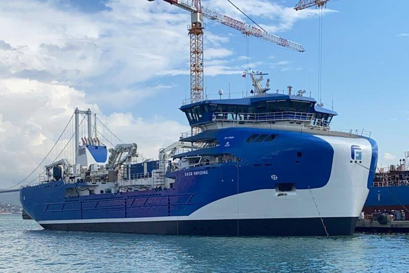
Learn how Quantum Water selected Danfoss APP high-pressure pumps, iSave ERDs, and VFDs for the SWRO plant on the world's largest wellboat to save space, energy, and maintenance.
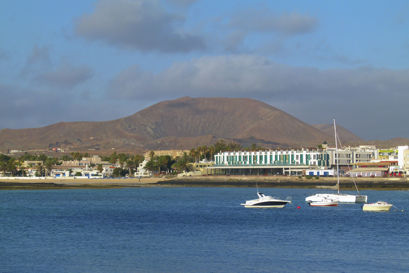
A reduction of 57% on the energy consumption was achieved by retrofitting with Danfoss pump and iSave ERD.

Energy efficient pumps and energy recovery devices help the Norwegian aquaculture industry to remove sea lice from salmon gently, sustainable, and effectively.
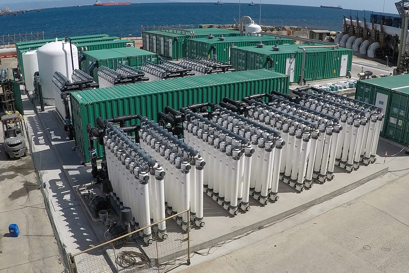
Danfoss solutions enabled the creation of an innovative sea water reverse osmosis (SWRO) modular desalination plant for the Sarlux refinery in Sardinia.
Follow us to stay up with the latest high news, updates, announcements, and resources from High Pressure Pumps. Of course, we want to hear from you too - so jump in and join the conversation.