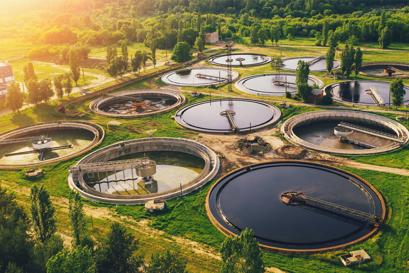
Fortunately, the history of desalination is also one of energy efficiency innovations. Since the earliest thermal plants and first-generation seawater reverse osmosis (SWRO) plants came online, energy consumption has fallen dramatically. Most of this optimization involves providing the high pressure that drives SWRO more energy efficiently. Now, a new world record in SWRO energy efficiency points to a historic opportunity to make desalination more accessible to more people and to reduce its carbon footprint.
The new world record in SWRO energy efficiency deserves more attention
In early May of this year, researchers in Spain achieved a new world record in SWRO energy efficiency when DESALRO 2.0, an experimental large-scale plant, broke the specific energy consumption (SEC) barrier of 2.0 kWh/m3. The new SEC record of 1.861 kWh/m3 was set by DESAL+ LIVING LAB, a public-private ecosystem for innovation in seawater desalination located in the Canary Islands. Financed by the E.U.’s REACT-EU program, the DESALRO 2.0 initiative ran from November 2021 to May 2023.
Following the Canary Islands Institute of Technology’s (ITC) pre-design criteria, the DESALRO 2.0 project launched a call for tenders focused on hydraulic, electrical, and automation systems to optimize energy efficiency. The ITC’s criteria homed in on best-in-class technologies with the most significant impact on SWRO’s energy efficiency, specifically the three components most closely related to high pressure. Accordingly, the ITC specified that:
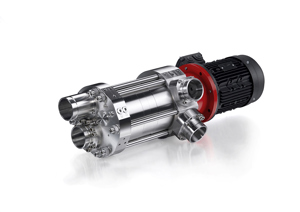
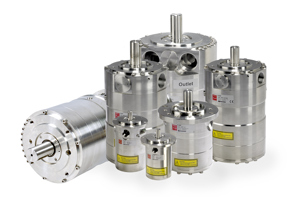
- The high-pressure pumps must be positive displacement pumps, the pump type that is inherently the most energy efficient. This is important because high-pressure pumps consume 70% of the typical SWRO plant’s energy.
- The energy recovery devices (ERDs) that capture and reuse pressure should utilize isobaric technology, as this helps the plant achieve the lowest SEC.
- The membranes that separate solids must be highly efficient hybrid types that increase permeate flux, reduce fouling, and have high boron rejection.
To learn more about the energy-efficiency advantages of positive displacement pumps compared to centrifugal pumps, see this article in Pumps & Systems.
The impact of the DESALRO 2.0 breakthrough could be huge for a thirsty world that also needs to decarbonize
The success of DESALRO 2.0 marks a significant step forward in making SWRO more energy efficient. This innovation highlights the enormous potential to decarbonize existing SWRO plants through retrofitting with the most efficient technology already widely available.
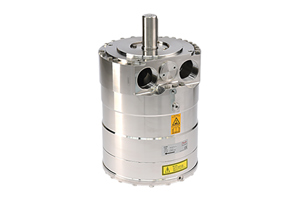
Importantly, the results from DESALRO’s test plant are scalable to a wide range of SWRO plants and could be replicated in many situations worldwide already today. Trains using positive displacement that operate at an efficiency of at least 88% at capacities between 5,000 and 10,000 m3/day can achieve similar SEC results. Danfoss’s positive displacement pumps, the APP range, operate at efficiencies above 90% and can deliver this capacity.
The ramifications of the world record are significant. New SWRO plants operating at this efficiency would be less expensive to operate and have a lower carbon footprint than what is now common, thus making this source of fresh water available to the growing number of people facing water scarcity. At the same time, retrofitting existing desalination plants to be as energy efficient as is now technologically possible would result in enormous savings on electricity costs and GHG emissions.
Retrofitting existing plants to be more energy efficient: An essential strategy for SWRO decarbonization
Historically, the first desalination plants using thermal distillation had SECs of up to 27 kWh/m³, or roughly 1400% higher than the new world record. Subsequent generations of SWRO plants are far more energy efficient, but most existing SWRO plants still have significantly higher SECs than what is now technologically possible. This can and should change.
As we calculated in one of our blogs, if all existing desalination plants worldwide were retrofitted to operate at 2.0 kWh/m³, the potential savings would be enormous:
- Energy savings: 247 TWh, equivalent to Spain’s total electricity usage in 2020
- Financial savings: €34.5 billion, enough to build seven wind farms the size of Hornsea Project 1
- Carbon emissions savings: 111 million metric tons of CO₂, surpassing the annual emissions of Bangladesh
According to head of innovation at Danfoss HPP, Georg Herborg Enevoldsen, retrofitting older, less-efficient SWRO plants typically contributes to decarbonization and reduces operational costs, but the business cases for all retrofits must be considered individually. “If the existing desalination plant is already fairly energy efficient, then the payback period can be too long. However, retrofitting plants with an SEC above 2.5-3 kWh/m3 would practically always be a good financial and environmental investment.”
Most SWRO experts concur that the primary barrier to retrofitting is the failure to implement accurate cost-benefit analyses.
While operational expenditures (OPEX) and greenhouse gas (GHG) emissions reductions are clear, financing the necessary capital expenditure (CAPEX) can be a deterrent. However, with growing regulatory pressure and the potential for carbon pricing, the incentives for energy-efficient retrofits are increasing. Government subsidies can play a pivotal role in accelerating this process.
Legislative initiatives supporting decarbonization can speed up SWRO’s green transition
Governments worldwide are dedicating substantial funds to decarbonization efforts. For instance, the European Union’s Green Deal directs significant resources towards sustainable technologies. Although these programs do not target SWRO energy efficiency specifically, retrofitting relatively inefficient plants should be well within their scope.
Europe, particularly its southern regions, faces growing water scarcity. Desalination plays a crucial role here, and transitioning to high-efficiency SWRO can significantly reduce energy consumption and carbon emissions. With its €1 trillion budget towards sustainable investments and additional funds from NextGenerationEU’s €800 billion budget, the European Union has pledged substantial funds for projects that align with carbon neutrality goals. We believe retrofitting inefficient desalination plants would be a good strategic fit for these ambitions.
Embrace innovation now to save energy, costs, and GHG emissions later
Adopting best-in-class technology as soon as it is economically viable is crucial for desalination operators aiming to enhance efficiency, cut costs, and reduce their environmental footprint.
The achievement of DESALRO 2.0, which used only already widely available components, underscores the potential for significant energy, cost, and CO₂ savings through retrofitting existing desalination plants. By adopting the latest technology, decision-makers can transform desalination into a more sustainable solution for combatting water scarcity and, at the same time, contribute to global decarbonization efforts that support the goals of initiatives like the European Green Deal.
For more information on Danfoss’ role in advancing energy-efficient solutions, visit Danfoss HPP for information on axial piston pumps and isobaric energy recovery devices and Danfoss Decarbonization for information on the Group’s commitments and activities to lower GHG emissions.