
Europe’s water problems are growing – particularly in the south
Although there is plenty of fresh water in Europe as a whole, water availability varies widely between regions. According to the European Environment Agency, annual renewable freshwater resources for all of Europe averaged 4,560 m3 per person between 1990-2017. However, this average can be misleading: Norwegians had as much as 70,000 m3 per person, whereas the Maltese had only 120 m3.
While droughts and water stress have been increasing across Europe in general, it is in southern Europe in particular that water shortages are growing in severity. Annual renewable fresh water supply per inhabitant fell between 1990 and 2017 across southern Europe from 2,800 to 2,400 m3, with Spain’s supply falling 65%, Malta’s 54%, and Cyprus’s 32%. It is also in southern Europe where 95% of Europe’s total volume of irrigation water is used, and the tourism sector in water-stressed regions needs more water than is naturally available to survive.
From low-efficiency to high-efficiency desalination
Within the European Union, Mediterranean countries have for decades relied on desalination for an essential share of water in their driest regions. For example, Spain introduced Europe to desalination in the Canary Islands in 1964 and now relies on it in many regions. The same is true across southern Europe. Recently, however, water stress is forcing even the Netherlands and Belgium to desalinate brackish and seawater to provide enough water for their citizens.
While almost all new desalination plants use high-efficiency SWRO, this was not always the case. Thermal desalination plants still operate in many places, as do SWRO plants that were built prior to 2005 – 2006 when isobaric energy recovery devices were widely adapted.
These older plants are much less energy-efficient than the newest plants. As we pointed out in a previous blog, A brief history of the energy intensity of desalination, the specific energy consumption (SEC) of thermal desalination plants ranges from 7 – 27 kWh/m3, whereas SWRO without isobaric energy recovery had an SEC range of 3 – 8 kWh/m3. Compare these numbers to the current state-of-the-art, high-efficiency SWRO plants with an SEC below 2 kWh/m3, and you can begin to get an idea of how much energy could be saved if all desalination plants operated in the most energy-efficient way.
In fact, if all desalination plants operated as efficiently as current best practices allow, the world would save a lot of energy, money, and CO2 emissions. We estimated these potential worldwide savings in a previous blog to be as high as 247 tWh of electricity, corresponding to €34.5 bio and 111 metric tons of CO2.
Using similar assumptions, we estimate that within the EU the savings would also be significant. If all of the EU’s older desalination plants were retrofitted to be as energy-efficient as is currently possible, member countries would save 11.4 tWh of electricity, corresponding to €1.6 bio and over five metric tons of CO2.
Why high-efficiency SWRO should be part of Europe’s transition to a carbon-neutral future
Although desalination’s overall contribution to Europe’s carbon footprint is relatively small compared to sectors such as electricity/heat and transportation, there are nonetheless compelling reasons for policymakers to consider high-efficiency SWRO as part of Europe’s transition to carbon neutrality:
- Particularly in southern Europe, desalination already plays a crucial role in agriculture and regional and rural development.
- As climate change and growing demand for water exacerbate water scarcity in many water-stressed regions, desalination will be the only or the best alternative water source, and its utilization will thus grow in the future.
- Desalination is the most energy-intensive source of freshwater and leaves a carbon footprint much larger than any other water source – but this can be reduced with the newest technology.
Decision-makers in regions that rely on desalination now and in the future should include energy optimization of desalination plants in their European Green Deal plans. It would be particularly relevant to retrofit older inefficient plants, built before 2005 – 2008, with high-efficiency SWRO technology to reduce their energy consumption and carbon footprint.
What is the European Green Deal?
When the European Union’s Commission presented the European Green Deal in December 2019, it set out the ambitious goal of making Europe the first climate-neutral continent by 2050 and decoupling economic growth from resource use.
In July 2021, the European Climate Law formalized this goal in a complex of binding legislation which, among other things, commits the bloc to reducing net greenhouse gas emissions by at least 55% by 2030 compared to 1990 levels.
The EU is backing these ambitions up with considerable funding, €1 trillion, which comprises two main streams:
- The EU budget and EU Emissions Trading System will provide more than half, or €528 billion.
- The rest will come from the InvestEU program, combining €279 billion from the public and private sectors with €114 billion in national co-financing.
What is more, Next Generation EU, the EU’s response to the coronavirus crisis, will bolster the Union’s 2021-2027 budget (also known as the Multiannual Financial Framework, or MFF) with more than €800 billion in additional funding to kickstart the European economy.
Significant portions of this combined budget of €2 trillion will be earmarked for modernization and other projects that support Europe’s transition to a carbon-neutral future, reducing greenhouse gases, and rural development – all goals that retrofitting inefficient desalination plants also supports.
Related blogs

Although just one percent of worldwide water consumption currently derives from desalinated seawater, desalination is responsible for an outsized share of water treatment’s global energy usage.

As we’ll see, thermal distillation, though still used today, is just the first generation of technologies adapted and developed to desalinate water. In terms of energy intensity, much has happened since Aristotle walked the shores of ancient Greece.

Our blog explores issues related to energy and cost efficiency in seawater reverse osmosis (SWRO). We’re investigating more topics and adding new blogs regularly.
Read more about our solutions for desalination
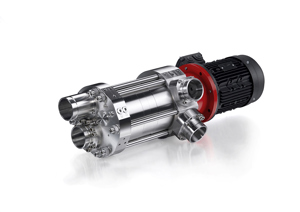
The first active ERD for medium and large plants, the MPE 70 integrates highly effective isobaric pressure exchangers with a low-voltage motor to eliminate the risk of rotor overspin, reduce mixing and biofouling, and facilitate smarter automation. Covering train sizes from 1,500 m3/day and above.
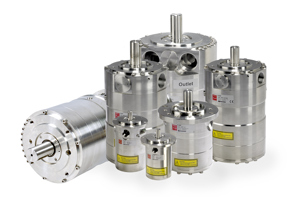
The range of high-pressure APP pumps is optimized for both landbased, off-shore and marine sea water reverse osmosis applications. Available with or without motor.
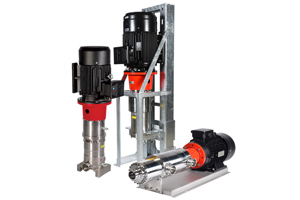
With a 3-in-1 design that integrates highly effective isobaric pressure exchangers with positive displacement booster pumps and electrical motors, active iSave® ERDs deliver big energy savings in small spaces. Covering train sizes from 200-3,000 m3/day

VLT® AQUA Drive FC 202 controls all types of pumps and comes equipped with a cascade controller.
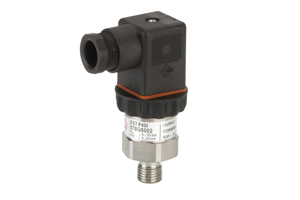
For use in corrosive environments and with aggressive media, Danfoss offers the robust DST P40I pressure transmitter made of Titanium and with ceramic pressure sensing element. DST P40I is optimized for use in applications such as desalination systems, seawater cooling, and chemical processing.
Explore our case stories

TSG is a water and wastewater treatment plant specialist with extensive experience in meeting the challenges of coastal and island environments.
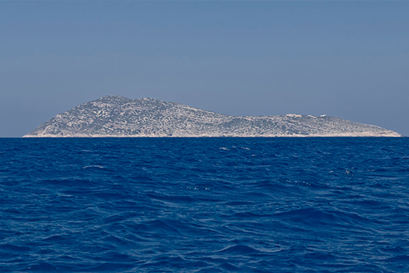
Running a SWRO plant in a remote Island with no electricity, no infrastructure and not permanent residents demands solid equipment. Learn how APP pumps solved this.
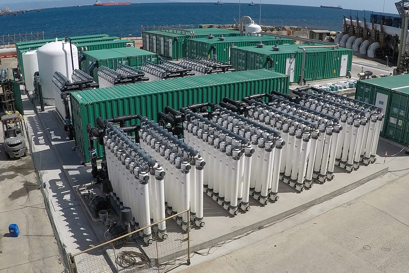
Danfoss solutions enabled the creation of an innovative sea water reverse osmosis (SWRO) modular desalination plant for the Sarlux refinery in Sardinia.
Follow us to stay up with the latest high news, updates, announcements, and resources from High Pressure Pumps. Of course, we want to hear from you too - so jump in and join the conversation.