
Demand for fresh water is growing worldwide – and faster than natural replenishment rates in many places
Our thirst for water has never been greater than it is now – and will only increase in the foreseeable future.
According to the United Nations World Water Development Report 2018, humankind now uses about six times as much water as we did 100 years ago, and our water usage will continue to grow at a rate of about 1% annually. Moreover, the same report reveals that what has driven increasing water consumption in the past will also drive future growth: growing population, greater economic development, and evolving consumption patterns.
- By 2050, the world’s population is expected to grow by about 25%, from the current 7.9 billion to roughly 10 billion. More people will need more water.
- Global gross domestic product (GDP) is expected to grow by a factor of 2.5 between 2017-2050. Increased economic activity will require more water.
- Global demand for two of the most water-intensive human activities – agriculture (which accounts for about 70% of all water withdrawals) and energy production – are expected to grow by approximately 60% and 80%, respectively, between 2017 and 2025.
The OECD estimates that global water demand will increase from about four trillion cubic meters in 2014 to six trillion in 2050. Against this backdrop of rapidly growing demand, the planet’s overall supply of fresh water remains relatively stable. In hydrological terms, our Earth has the fresh water it has, and still has plenty of it – whether in underground aquifers, lakes and rivers, or glaciers and ice caps. The problem is, naturally occurring water cycles do not necessarily replenish fresh water supplies where and when large and growing human populations need them.
We no longer live nearby the clean, fresh water we need
For most of human history, the size of our settlements depended directly on the availability of drinking water nearby. We got our water from rivers, springs, and shallow wells – and we lived near them. As our technologies developed, however, and we transitioned from hunter-gatherer to agricultural economies, so did our water management systems and our ability to transfer lifegiving water.
Much has changed since the first known irrigation systems were introduced in Egypt in 6,000 BCE. Although very few of us now live within walking distance to good water in a local spring or even have any idea where our water even comes from, according to the WHO, 71% of us now have access to safely managed water. The other 29% of us, 2.2 billion people, do not.
However, even those with easy access to fresh water now may not have it in the future. Many who turn on the tap for decent water live in areas whose local fresh water supplies cannot sustainably support them. Below are just a few examples:
- China has about 18% of the world’s population but only 7% of the world’s freshwater resources. Within China, the North China Plain is home to 42% of the country’s population but contains only 8% of the country’s water resources.
- India has about 17% of the world’s population but only 4% of the world’s freshwater resources. After withdrawing 25% more groundwater than the natural replenishment rate, Delhi’s 29 million inhabitants are running out of water.
- Middle East & North Africa (MENA): Already the most water-scarce area in the world, the MENA region has experienced rapid population growth, and more is projected. By 2050, most MENA countries may have as little as 200 m3 of renewable water sources per capita per year.
We could go on, but you get the picture: Human population and water withdrawals continue to grow – also in regions without enough natural water replenishment to secure supply. In many of these places, water availability has already declined to alarming levels and will continue to fall. As we’ll see below, water scarcity is an escalating worldwide challenge and will be further exacerbated by climate change.
Water scarcity is a growing global problem
As shown in the image from The Water Scarcity Atlas, water scarcity is a global phenomenon that affects high-, middle-, and low-income countries alike. However, its impact is felt most acutely by the poor.
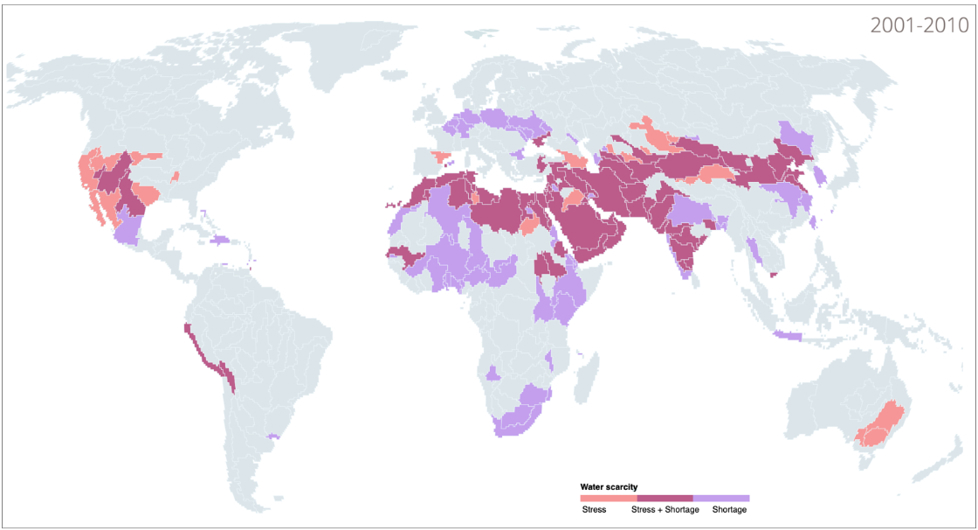
Water scarcity is widely recognized as one of the biggest threats facing humanity, and the threat is growing. According to UNICEF,
- Already today, four billion people live with severe water scarcity at least one month a year
- By 2030, 700 million people could be displaced by severe water scarcity
- By 2040, about 25% of the world’s children will live in areas of extremely high water stress
In addition to increased demand, several other factors contribute to water scarcity. One of these is droughts, where persistent rainfall deficiency reduces average water availability. Droughts are nothing new and have changed the course of human history, leading to famine, massive displacement, and conflict. However, the duration, intensity, and frequency of droughts have increased worldwide over the last several decades and are projected to worsen in the future due to climate change.
Paradoxically, another contributor to water scarcity is floods. Caused by extreme weather events, flooding creates clean water scarcity when hazardous waste sites, sewers, and agricultural and livestock facilities overflow and pollutants are dumped into human water supplies, making them unpotable. Again, the growing frequency and severity of floods is related to global warming: floods in the tropics have increased 400% since the 2000s and 250% in the north midlatitudes.
Pollution also plays a significant role in water scarcity. Agricultural and industrial pollutants flow into surface and groundwater, and untreated human wastewater renders vast quantities of otherwise good water unpotable.
Finally, let’s not forget water infrastructure and management – or lack thereof. In both low-, middle- and high-income countries, poor management of available water accounts for massive waste of this precious resource. Better water and wastewater management must play a significant role in reducing water scarcity and mitigating its impact. Delhi, which faces severe water shortages, scored at the bottom of an Indian index of water management performance, the lowest of India’s 26 states. American households waste an estimated one trillion gallons of water annually due to dripping faucets, running toilets, and other faulty plumbing. Another two trillion gallons go missing every year from leaks in America’s municipal water pipes.
Climate change is making things worse and increasing the urgency to change
Given the growing demand for water that outstrips supply, the mismatch between water availability and population concentration, and increasing water scarcity worldwide, it would be easy to conclude that things are bad enough. Unfortunately, things will most likely get even worse, and climate change is why.
Climate change exacerbates almost every aspect of water scarcity. It disrupts meteorological and hydrological patterns to decrease predictability and increase the probability, frequency, and severity of extreme weather events. This results in more droughts, more heatwaves, more tropical storms, more flooding – and more water scarcity for growing populations.
According to the United Nations, “Climate change impacts are most felt through changing hydrological conditions including changes in snow and ice dynamics.”
Weather patterns worldwide will change. Rising sea levels caused by global warming will increase seawater intrusion in coastal areas, where about 40% of the world’s population lives, impacting aquifers and rivers that people depend on for water. Major river basins that are home to billions and depend on glacial runoff and snowmelt will also be affected.
Desalination is increasingly important and will continue to grow as demand and water scarcity increase and technology continues to improve
As we pointed out in a previous blog, desalination currently accounts for just one percent of global water consumption, but this share is projected to expand. There are at least three reasons to expect that desalination will play an increasingly important role, especially in areas with high water demand and high water scarcity:
- Desalination will be the best or the only available alternative: In some cases, water scarcity will make desalination the only option for more water. Ground and surface sources will be depleted, populations will not be able to rely on precipitation patterns to renew them, water transfer from wetter regions will be too costly, and displacing populations will be unfeasible.
- The costs of high-efficiency SWRO will become more accessible for more people: There are two aspects of this development: On the one hand, innovation, competition, and broader dissemination of best practices will continue to bring down the energy consumption and other production costs of high-efficiency SWRO. On the other hand, increased economic development will enable more communities to afford the technology.
- Renewable energy sources will decrease the financial and environmental impact of high electricity consumption: Although SWRO is increasingly energy-efficient, with the best systems requiring as little as 2.0 kWh/m3, it still requires far more energy to desalinate water than to treat ground or surface water. This has financial as well as environmental costs. However, as global decarbonization efforts increase renewables’ share of electricity generation, the impact of electricity consumption will decrease.
Desalination is only part of the solution. Better water management and decarbonization are key strategies moving forward
Although future populations will increasingly rely on desalination to meet their demands for fresh water, desalination is clearly not a panacea to global water scarcity. In many cases, distance from the sea will simply be cost prohibitive.
In any case, water conservation, infrastructure and management must be improved as thirsty populations come to terms with water scarcity and learn to make the most of available water resources. At the same time, global decarbonization efforts to combat climate change must be redoubled. This includes, of course, continued focus on making desalination more energy efficient.
Related blogs

Energy efficiency has a minor impact on SWRO’s CAPEX but a huge impact on OPEX & TCO
Our blog explores issues related to energy and cost efficiency in seawater reverse osmosis (SWRO). We’re investigating more topics and adding new blogs regularly.

As we’ll see, thermal distillation, though still used today, is just the first generation of technologies adapted and developed to desalinate water. In terms of energy intensity, much has happened since Aristotle walked the shores of ancient Greece.
Read more about our solutions for desalination
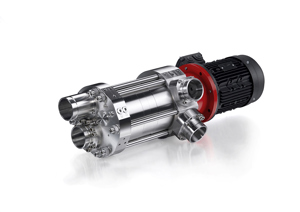
The first active ERD for medium and large plants, the MPE 70 integrates highly effective isobaric pressure exchangers with a low-voltage motor to eliminate the risk of rotor overspin, reduce mixing and biofouling, and facilitate smarter automation. Covering train sizes from 1,500 m3/day and above.
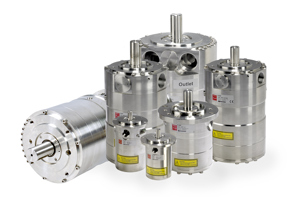
The range of high-pressure APP pumps is optimized for both landbased, off-shore and marine sea water reverse osmosis applications. Available with or without motor.
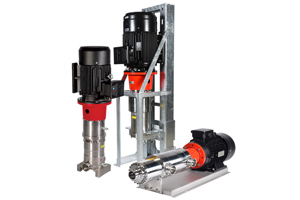
With a 3-in-1 design that integrates highly effective isobaric pressure exchangers with positive displacement booster pumps and electrical motors, active iSave® ERDs deliver big energy savings in small spaces. Covering train sizes from 200-3,000 m3/day

VLT® AQUA Drive FC 202 controls all types of pumps and comes equipped with a cascade controller.
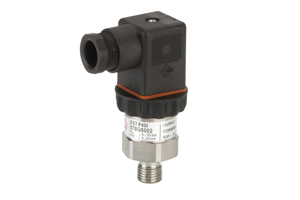
For use in corrosive environments and with aggressive media, Danfoss offers the robust DST P40I pressure transmitter made of Titanium and with ceramic pressure sensing element. DST P40I is optimized for use in applications such as desalination systems, seawater cooling, and chemical processing.
Explore our case stories
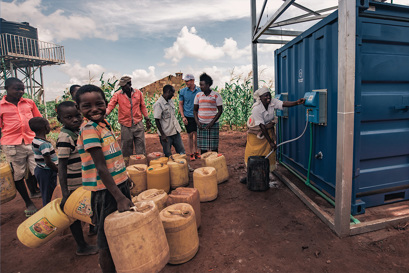
A solar-powered desalination plant in Kenya gives the community affordable, clean, and sustainable drinking water and irrigation water.
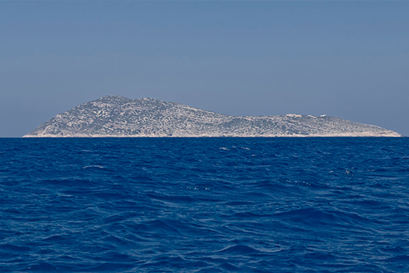
Running a SWRO plant in a remote Island with no electricity, no infrastructure and not permanent residents demands solid equipment. Learn how APP pumps solved this.
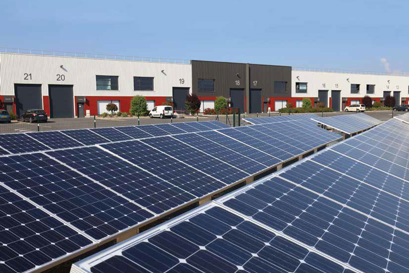
Mascara NT chose Danfoss pumps and ERDs to drive an RO plant whose only energy source is the sun. Specially developed for some of the world’s most arid and isolated regions, the new OSMOSUN system is designed to produce water so efficiently that it does not need energy storage. By eliminating costly battery packs, Mascara NT’s solar powered plant radically reduces total life cycle costs and enables clean water in locations completely off the grid.
Follow us to stay up with the latest high news, updates, announcements, and resources from High Pressure Pumps. Of course, we want to hear from you too - so jump in and join the conversation.