
Danfoss Impact No. 4
Energy efficiency, electrification, demand-side flexibility, conversion, storage, and sector integration are integral for a future energy system enabling an energy grid powered by renewables.
Download the Impact paper now
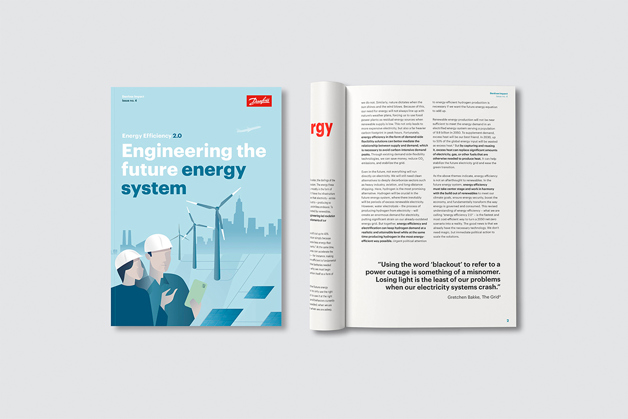
It's time to rethink energy efficiency
By 2050, renewables need to make up roughly 70% of the energy mix if we are to reach net zero and the goals of the Paris Agreement. Will we have the capacity and infrastructure to efficiently use all that renewable energy once we have it? If we don’t have the infrastructure in place to effectively use electricity from wind and solar, producing so much of it is a relatively pointless endeavor. An electrified society could cut up to 40% of final energy consumption. At the same time, energy efficiency measures can accelerate the electrification of sectors.
In the future energy system, we need to use energy at the right time. Our habits and behaviors currently dictate when energy is needed. Similarly, nature dictates when the sun shines and the wind blows. Our need for energy will not always line up with nature’s weather plans, forcing us to use fossil power plants as residual energy sources when renewable supply is low. Energy efficiency in the form of demand-side flexibility solutions can better mediate the relationship between supply and demand, which is necessary to avoid carbon-intensive demand peaks.
Hydrogen will be crucial in the future energy system, where there inevitably will be periods of excess renewable electricity. Energy efficiency and electrification can keep hydrogen demand at a realistic and attainable level while at the same time producing hydrogen in the most energy-efficient way possible.
To supplement energy demand in 2050, excess heat will be captured and reused to replace significant amounts of electricity, gas, or other fuels that are otherwise needed to produce heat.
Energy efficiency must work in harmony with the build-out of renewables to meet our climate goals, ensure energy security, boost the economy, and fundamentally transform the way energy is governed and consumed. This revised understanding of energy efficiency – what we are calling “energy efficiency 2.0” – is the fastest and most cost-efficient way to turn a 2050 net-zero scenario into a reality. We already have the necessary technology. We don’t need magic, but immediate political action to scale the solutions.

Only got two minutes?
These are the key takeaways

By transitioning from a fossil energy system to a fully electrified one, we can cut up to 40% of final energy consumption. Electrification is itself a form of energy efficiency, as most electric technologies have a lower rate of energy loss while performing the same function as a fossil driven equivalent.

Reinventing energy efficiency is not only about using less energy, but also using the energy at the right time. By maximizing the potential of demand-side flexibility, the EU and UK can annually save 40 million tons of CO2 emissions and reduce the electricity generation from natural gas by 106 TWh, or about one-fifth of the EU’s natural gas consumption for electricity generation in 2022. Adding to this, the annual societal cost savings amounts to €10.5 billion by 2030. Similarly, households can save on average 7% on their electricity bills.

Powering our future energy system with renewables will require a rapid scale-up of hydrogen. However, hydrogen conversion requires incredible amounts of energy; by 2050, hydrogen production will require more than half the total electricity demand today. High-efficiency technologies for electrolysis will be essential to ensure energy security and stability, as well as to lower energy demand for hydrogen.

By strategically integrating sectors and deploying excess heat, we
can ultimately lower demand on energy production and maximize
efficiency. By 2030, up to 53% of the global energy input will be
wasted as excess heat. However, this heat can be captured and
reused to power machinery, as well as heat buildings and water through
deeper sector integration.
Policy recommendations
Danfoss Impact Series
This Impact paper provides a clear guide on how companies can strengthen their competitive advantage through decarbonization, electrification, and energy efficiency.
Green hydrogen will play a critical role in the transition away from fossil fuels and in decarbonizing hard-to-abate sectors, such as long-distance shipping and international aviation.
Our roadmap for decarbonizing cities outlines the technologies available to meet global climate goals and accelerate the green transition.