
The perfect match for zero-emission construction through electrification and highly-efficient digital hydraulics
It is estimated that, globally, construction machines emit around 400 Mt of CO2 each year, out of which excavators in particular account for more than 200 Mt of CO2 emissions annually globally.
Therefore, electrifying medium and heavy construction machines is a clear commitment to the environment, as well as an investment into a greener future. But what if we told you there was a way to also maximize the financial return of this investment and ensure higher profits for your business?

Digital Displacement as the enabler for electrification
Together, Danfoss Editron and Digital Displacement are the strongest combination to make electrification a commercially viable option for construction machinery and help the industry to significantly reduce its CO2 emissions footprint, particularly for excavators.
Features and benefits
-
Drastic reduction in energy consumption while maintaining full machine productivity
-
Extending operating range and/or reduced battery size and cost
-
Significant improvement of noise emissions over conventional hydraulic pumps
-
Next generation control flexibility for multi-outlet systems, combining the best of variable speed and variable displacement systems
Combining Danfoss Editron and Digital Displacement will help bring down the total cost of ownership of electrified machines below that of the conventional equivalent.
The match
Danfoss Editron
The Danfoss Editron electric drivetrain system includes a broad portfolio of electric machines and electric converters that are designed and proven for mobile machines and harsh environments. In fact, most of the electrified medium-sized excavators in operation on construction sites today utilize Danfoss Editron solutions.

Digital Displacement®
The Danfoss Digital Displacement pump is not only the most efficient variable displacement pump on the market, but it also enables innovative hydraulic system architectures which dramatically reduce system energy losses. Today, a Digital Displacement pump system is expected to save 25% of the total energy consumption, and future energy recovery architectures could further reduce consumption by up to 50%.

Applications
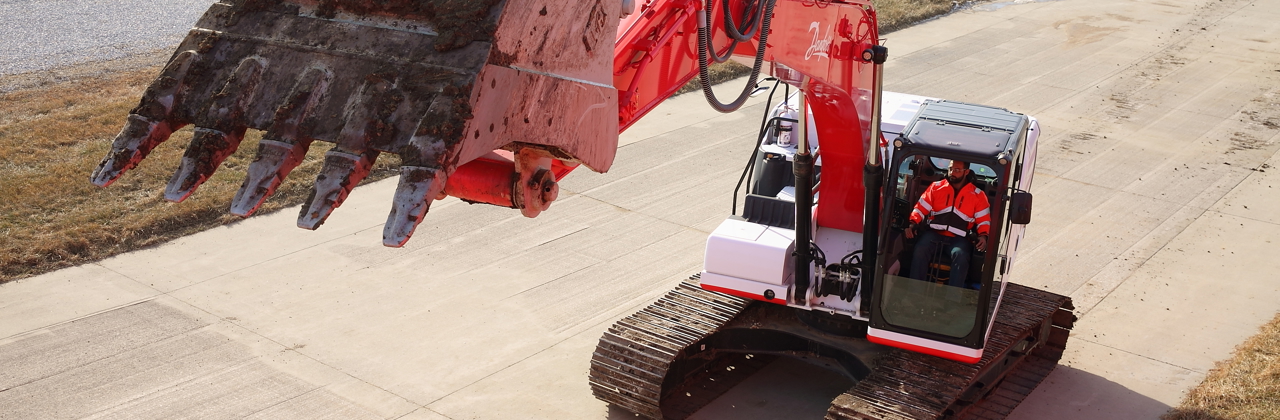
This solution is pushing the existing limits by enabling the total business case to become positive even for larger machines.
Case Story: Excavator