
Sygehus Sønderjylland, a hospital located in Sønderborg, Denmark, has partnered with Danfoss Sector Coupling Solutions and the district heating utility company, Sønderborg Varme, to reduce its CO2 emissions.
The Challenge
Since the start of the energy crisis in 2022, companies across Europe have been looking for ways to reduce their reliance on fossil fuels and find more efficient ways of heating and cooling their buildings. Hospitals are no exception. However, unlike corporate entities, hotels, or restaurants, hospitals can’t simply increase the price of their products to offset energy price increases. They must find a way to improve their buildings’ energy efficiency and identify sustainable energy sources.
For Sygehus Sønderjylland, the drive to decarbonize was about more than just financial savings. The hospital aimed to achieve carbon neutrality, and its management recognized the potential of combining heat recovery with district heating to reach that goal. Therefore, the hospital partnered with Danfoss and the local heating utility to explore ways to reduce both their energy bill and carbon emissions simultaneously.
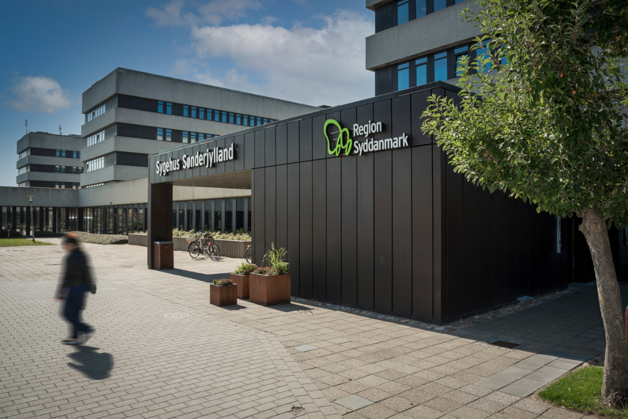
The Solution: Unlock the potential of excess heat
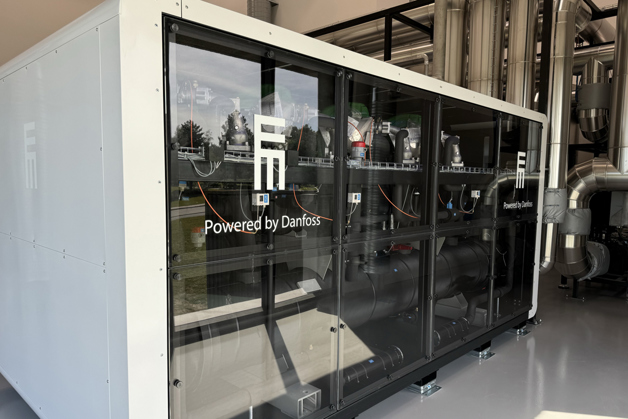
The hospital installed two new energy-efficient heat pumps and an updated hydronic heating and cooling system to replace its gas-based heating system and accompanying boilers. The heat pumps, powered by Energy Machines™, provide the hospital with cooling through an integrated critical equipment and comfort cooling system. Each pump is equipped with four Danfoss oil-free Turbocor® compressors, which provide exceptional efficiency, particularly for cooling applications, and are an ideal fit for cases with high cooling demand, such as hospitals. The hospital expects to reduce the amount of energy it purchases by 28,300 MWh each year.
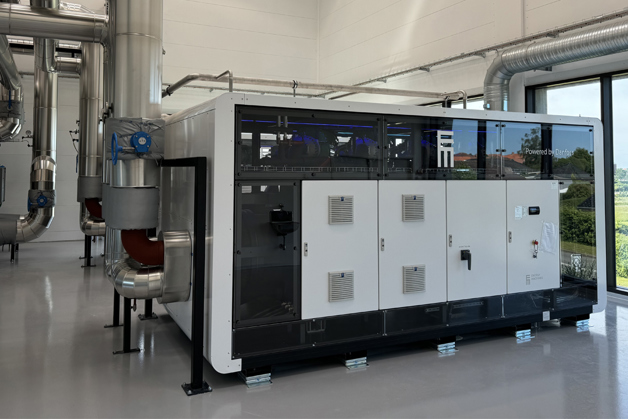
The hospital uses the heat recovered from the cooling system to meet its process and comfort heat loads. When the system generates more heat than the hospital needs, the heating utility – Sønderborg Varme – transfers the excess heat to the district energy grid for use in heating private homes. In the cold months, when the cooling load is low and the heating demand is high, the hospital can use the bi-directional heat exchanger to supplement the heating delivered to the hospital through the grid. Once the system is fully implemented, the hospital expects to sell back 15,800 MWh of excess heat to the grid, which could cover the heat consumption of more than 877 average Danish households. This not only helps the hospital lower its carbon footprint, but it also creates a more comfortable indoor climate for patients, staff, and the surroundings.
The Results: From energy consumer to energy provider
According to Martin Brander, Senior Business Development Manager, Sector Coupling Solutions, Danfoss, this case is an excellent example of how communities can create sustainable energy systems. “By capturing heat from the hospital’s cooling system and channeling it into the local district heating network, the hospital transforms into an energy provider,” Martin says. “It illustrates how we can design energy systems that meet both heating and cooling needs in a sustainable way.”
By capturing heat from the hospital’s cooling system and channeling it into the local district heating network, the hospital transforms into an energy provider. It illustrates how we can design energy systems that meet both heating and cooling needs in a sustainable way.

The experiences gained from this project will also benefit other hospitals within the region, as Jesper Møller Iversen, Head of Finance and Planning at Sygehus Sønderjylland, points out. "With great pleasure, we wave goodbye to fossil fuels at the hospital in Sønderborg and welcome the green transition. As a large organization, we are pleased to be able to make our contribution to this important transition. We expect to gain a lot of valuable experiences, which can also benefit other hospitals in the region and throughout Europe."
With great pleasure, we wave goodbye to fossil fuels at the hospital in Sønderborg and welcome the green transition. As a large organization, we are pleased to be able to make our contribution to this important transition. We expect to gain a lot of valuable experiences, which can also benefit other hospitals in the region and throughout Europe.

News
Sygehus Sønderjylland – the local hospital in Sønderborg located in Southern Denmark – is leading the way in ensuring a greener and more sustainable future in healthcare as they are replacing gas-based heating and cooling systems with energy-efficient technology.
Read the Press release
Related products
Our service team offers repairs, trouble shooting, upgrades, and on-site cleaning and maintenance of your plate heat exchanger solution. We always utilize genuine spare parts both for SONDEX® heat exchangers and our selection of other heat exchanger brands.
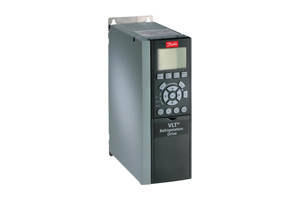
FC 103 is dedicated to controlling compressors, pumps and fans for significant energy savings in refrigeration plants.
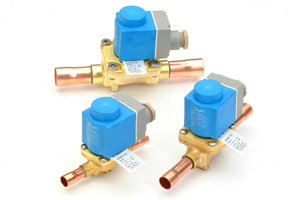
Danfoss offers a complete range of direct and servo-operated solenoid valves for air conditioning and refrigeration systems. The easy-to-service EVR® valves can be used in liquid, suction and hot gas lines. The valves are compatible with fluorinated refrigerants, including high-pressure refrigerants such as R410A (EVRH).
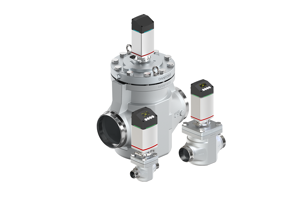
The ICM motor operated valves from Danfoss ICV Flexline™ series are quick and simple to handle, install and service due to their low weight and compact design.
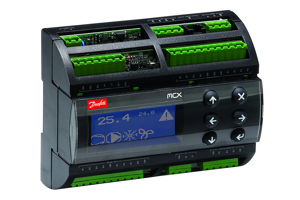
Danfoss’ range of universal MCX programmable controllers offers the functionality and reliability you need to get the best out of your heating, ventilation, air-conditioning and refrigeration (HVAC/R) equipment.
Related applications
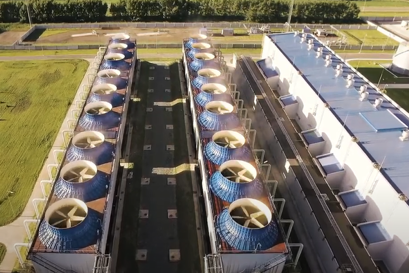
Integrated energy systems, sector integration, sector coupling – it goes by many names but is, in essence, the same principle; creating a smart energy system that links energy-consuming sectors to the power grid to optimize the synergy between production of energy and use of energy.
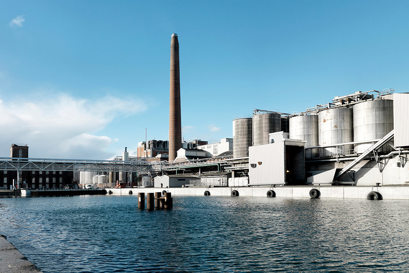
Unlock the grids full potential with end-to-end district energy solutions and get actionable insights enabling continuous optimization and optimal temperature control on both demand and supply side.
Energy efficient and environmentally friendly heat pump solutions are essential in all modern heating and cooling of residential and commercial spaces.