
On Amsterdam’s IJ River, hybrid ferries powered by VACON® drives enjoy 24/7 uptime, smaller generator size, improved air quality, less noise and easy maneuverability.
GVB has a policy of reducing the emissions and environmental impact from its ferries, trams, buses and cars to an absolute minimum. So when GVB ordered 2 new ferries from Holland Shipyard they decided to use battery hybrid technology to improve fuel efficiency and reduce pollution.
Peak shaving reduces generator size
The ferries operate 24 hours 365 days per year. It takes about 4 minutes to cross the IJ River and the ferries are docked for only about 2 minutes before departing on the next trip.
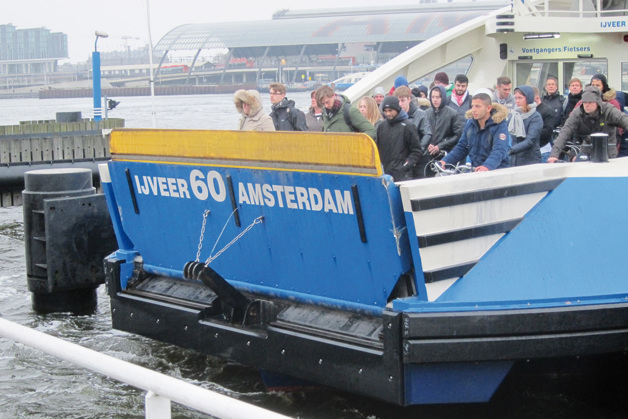
A 100% battery-powered electric ferry was not possible as the time spent docked in port was too short to charge the batteries from a shore power connection. Instead, GVB decided to use electric propulsion with diesel- powered generators and Lithium-Ion batteries to shave the power peaks.
This allowed them to downsize the generators, as these batteries enable the generators to run very efficiently with an almost constant load.
Hybrid improves air quality …
To reduce the remaining air pollution the diesel engines are fitted with efficient exhaust gas cleaning systems, also known as SCR (selective catalytic reactor), which remove toxic gases and particles.
The IJ Ferries 60 and 61 already fulfil the new stricter air pollution rules, which will apply from 2019/2020. This contributes to improving the air quality and reduces noise for the citizens of Amsterdam and for the millions of tourists using the ferries.
… and maneuverability
The skippers are very happy with the new ferries: The ferries are just as easy to handle as the conventional diesel-powered sister ships, but they are much quieter. The low noise level makes the ride a pleasure for both passengers and crew.
24/7 uptime
The city of Amsterdam considers the ferries to be “floating bridges” – which help to tie the northern and southern parts of Amsterdam ferries. The floating bridges are free of charge for the passengers.The two redundant DC grid systems were chosen for safety reasons – but the short circuit protection was a challenge. GVB is satisfied with the solution and will consider the same hybrid ships the next time there is a need for new ferries.
Get more information
Read case story as a PDF
Read more about Hybridization
Read more about Marine and offshore
Read more about VACON® NXP Grid Converter
Read more about VACON® NXP DC/DC Converter
Read more about VACON® DCGuard
All power conversion installations
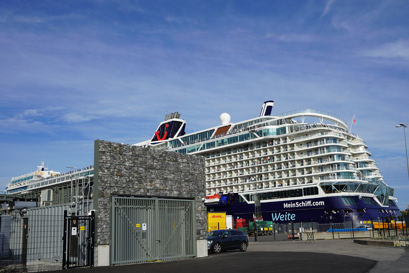
NORWAY & SWEDEN: PSW (Power and Automation AS) paired up with Danfoss to create compact OPS solutions in three Nordic harbors: Stockholm, Ålesund and Haugesund/Karmsund.
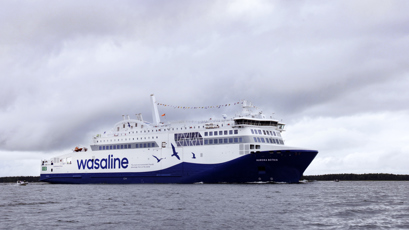
FINLAND: The Aurora Botnia cargo and passenger ferry is equipped with a hybrid-electric propulsion system, powered by liquid-cooled iC7 drives from Danfoss.
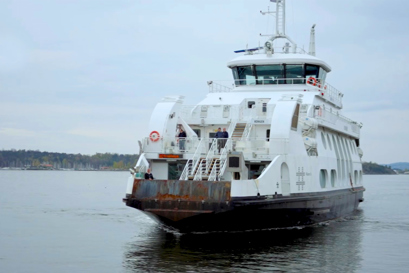
NORWAY: Electrification of the Nesodden ferries has reduced CO2 emission in the port of Oslo. VACON® drives and power converters play a key role onboard.
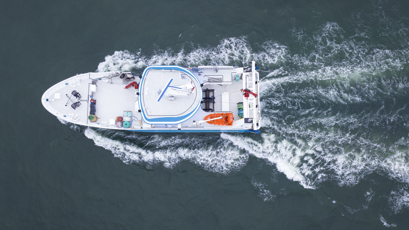
NORWAY: The new training vessel at Maløy Fishing School uses less diesel and emits less CO2, while also meeting the rigorous demands of the fishing industry.
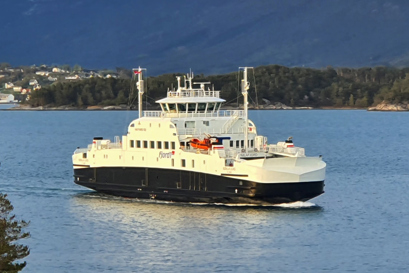
NORWAY: The Hareid-Sulesund ferry operations have reduced CO2 emissions by 7000 tonnes annually with the introduction of electric vessels. In transitioning ferries from diesel to pure electric power, powerful onshore support is essential, in the form of reliable infrastructure for rapid charging capacity and stable grid supply. The systems on board and on shore act as a single system – a sophisticated and competitive system developed by Norwegian Electric Systems (NES) using Danfoss technology.
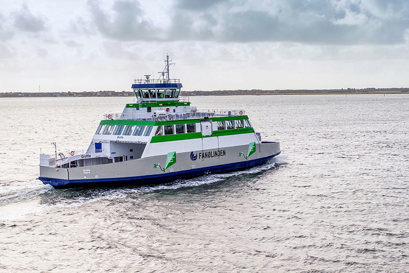
Molslinjen – Denmark's largest domestic ferry company – has set its first electric ferry in motion. The E-ferry Grotte will be breaking waves at the UNESCO World Heritage waters between the coastal town of Esbjerg and the island Fanø – and Danfoss is on board. The future holds great potential to operate shorter routes by electric ferries.