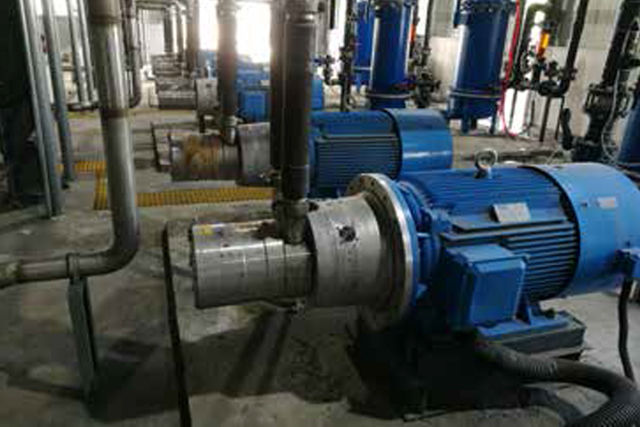
China’s zero liquid discharge legislation (ZLD) is driving increased use of RO technology to treat industrial wastewater. For although ZLD eliminates contamination from factory effluents into groundwater and waterways, ZLD comes at a high energy cost which RO treatment prior to brine concentration and crystallization reduces substantially. Danfoss APP pumps are increasingly indemand to make such ZLD projects as energy-efficient – and profitable – as possible.
Beijing Tiandiren Environ-Tech Company Limited (TDR) won the bid to build a new 12,000 m³/day wastewater treatment facility for a biopharmaceutical manufacturer in Xin Jiang Province. The end-user, Chuan Ning Biological, had to comply with the Chinese government’s tough new zero liquid discharge (ZLD) legislation and required a Build-Operate-Transfer (BOT) RO project which it would later take over after the contract period. “The Chinese government’s ZLD legislation is very ambitious,” says Obama Sun, general manager at Beijing C.I.I.T. Environmental Co. Ltd, the Danfoss distributor who supplied the pumps. “It has the dual benefits of completely eliminating pollution from a production facility’s wastewater and of saving water, a very precious natural resource in many parts of China. But ZLD is also very energy intensive, both because brine concentration and crystallization require very high kWh usage per cubic meter of wastewater, and because salinity concentrations in such RO applications can be much higher than those treated in traditional SWRO plants.”
TDR proposed a multi-stage RO facility treatment using a range of DT membranes as the most efficient solution because of the high salinity of Chuan Ning Biological Company’s wastewater. Danfoss APP pumps played a key role:
TDR engineers were familiar with Danfoss APP technology from other wastewater projects. “TDR has been using APP pumps to treat wastewater for an industrial park in another BOT project in Inner Mongolia for a number of years now,” Sun explains. “Based on this experience, both they and we had full confidence that our profitability calculations for this new ZDL project were reliable, and that the project will meet both our customer’s and the end user’s expectations completely for the duration of the 10-year contract and beyond.”
As is the case with TDR’s other build-own-transfer (BOT) projects, the Chuan Ning Biological contract was based onwastewater volume: Chuan Ning pays a fixed rate per cubic meter of treated water. This means that TDR’s incentive to treat the wastewater as cost-efficiently as possible was high. “Over the course of the 10-year BOT period, energy costs topower the high-pressure pumps are the most important cost driver,” says Sun. “But maintenance costs for so many pumps are also a critical consideration. APP pumps are outstanding OPEX performers in both regards.”
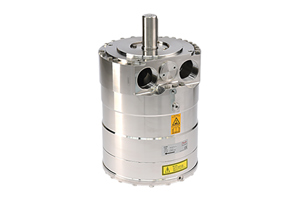
The APP W HC pump is suitable for ZLD and MLD reverse osmosis applications used in industrial wastewater treatment.
At Danfoss, we have always been dedicated to maintaining the longevity and performance of your equipment through our out-of-warranty repair services. Our new Fixed-Price Repair Program builds on this commitment by offering not only repairs but also upgrades to older products with the latest parts. This ensures optimal performance and reliability, allowing you to extend the life of your equipment.