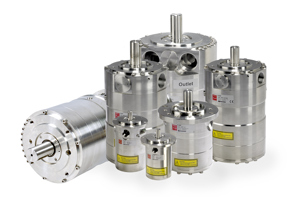
Hyrec has pioneered energy-efficient brine mining technology to produce food-grade salt in Indonesia. In a world-first, the large-scale, multi-stage plant integrates Hyrec’s osmotically assisted reverse osmosis (OARO) system after the seawater reverse osmosis (SWRO) system to significantly reduce the size and workload of its evaporator and crystallizer. Both stages rely on Danfoss APP pumps and iSave ERDs, minimizing CAPEX, OPEX, and greenhouse gas emissions while producing 220,000 tons of food-grade salt annually for the local market.
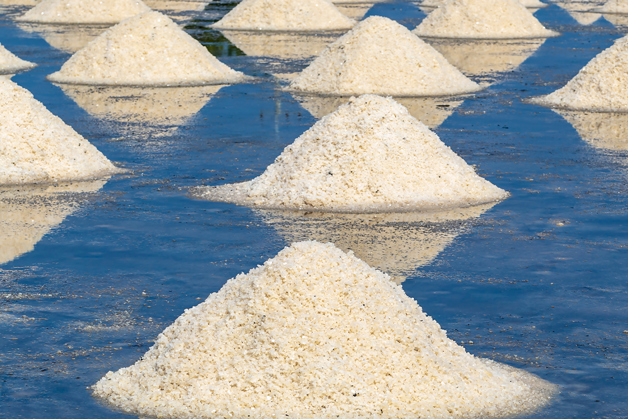
Despite Indonesia’s extensive coastline, its growing population needs far more salt than traditional evaporation ponds can provide. Brine mining offers a strategic opportunity to address this gap.
According to Ata Kayaoglu, Hyrec’s project engineer, “Our goal was to design a large-scale brine concentration plant to produce food-grade salt with the lowest possible TCO. Challenges included the plant’s remote West Java location and distinct dry and rainy seasons, causing significant seawater salinity variations. All high-pressure components needed to handle these fluctuations efficiently, remain reliable, and allow simple maintenance.”
To achieve the required salt purity at a competitive cost, Hyrec’s plant uses a pioneering multi-stage process. Ultrafiltration removes solids, and nanofiltration remove calcium, magnesium, and sulfates before the brine progresses through the SWRO, OARO, and thermal stages.
“This is the world’s first large-scale brine concentration plant using OARO,” says Kayaoglu. “OARO can concentrate solutions up to 25%, though the specific target depends on economic feasibility studies. These studies consider factors such as energy, water, and salt prices, along with energy consumption and investment costs, to determine the optimal concentration for a given project and region.”
Hyrec selected Danfoss APP pumps and iSave ERDs for the plant’s SWRO and OARO processes. “These high-pressure stages are critical to the plant’s TCO,” explains Kayaoglu, “and Danfoss technology ensures their energy efficiency, reliability, and adaptability.”
The SWRO stage includes three trains, each with four APP 86 pumps and four iSave 70 ERDs. The OARO stage has three trains with two APP 78 pumps and two iSave 50 ERDs.
“We chose Danfoss APP pumps for both stages due to their energy efficiency and ability to maintain outstanding performance despite seasonal seawater salinity variations,” explains Kayaoglu. “We chose iSave ERDs because they excel at energy recovery and allow us to manage the mixing ratio, an issue that is especially critical in the OARO stage where higher brine viscosity can reduce efficiency. Furthermore, higher concentration polarization does not affect the iSave’s efficiency. The iSave’s integrated booster pump and motor allow active control of the isobaric ERDs to increase the operational precision that this plant depends on.”
“Last but not least, both APP pumps and iSave ERDs are easy to service, which is vital in remote locations like this. Their proven designs allow us to handle most maintenance on-site,” adds Kayaoglu.
Hyrec’s plant began operations at the end of 2023. As planned, the multi-stage plant is well on its way to producing 220,000 tons of > 99.5% pure food-grade salt and 27,120 m3 of desalinated water daily.
“The plant has been a success at many levels,” says Kayaoglu. “In our role as owner’s engineers, our team has had the advantage of handling all project management, from civil engineering to designing all of the systems in what is the world’s first brine mining plant with membrane-based OARO at this scale. In addition, the project has involved a good deal of collaborative innovation with Danfoss and other suppliers.”
The range of high-pressure APP pumps is optimized for both landbased, off-shore and marine sea water reverse osmosis applications. Available with or without motor.
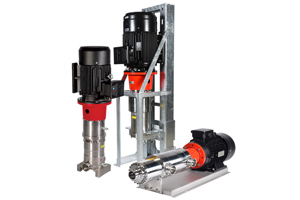
With a 3-in-1 design that integrates highly effective isobaric pressure exchangers with positive displacement booster pumps and electrical motors, active iSave® ERDs deliver big energy savings in small spaces. Covering train sizes from 200-3,000 m3/day