A combined differential pressure controller and flow controller (PQ) consists of two independent differential pressure controllers and a flow restrictor (manual balancing valve) integrated in one valve body.
This device has two functions:
1) A differential pressure controller maintains fixed differential pressure over the flow restrictor (flow control). This ensures automatic flow limitation, independent of pressure variations in the system.
2) A differential pressure controller maintains constant differential pressure over motorised control valves or over the entire loop.
This is the best solution for the district heating utility as it enables both variables (maximum flow and differential pressure) to be set independently of the consumer’s heating control system. Especially when the subscriber station is owned by the consumer, the utility has no influence over flow limitation at the consumer’s end of the system.
This enables the district heating utility to control the flow available for each consumer as well as the differential pressure control at the substation. This allows efficient network balancing.
Another solution is the PB controller, which consists of one pressure controller and a flow restrictor (manual balancing valve). The PB is used in systems where independent flow and differential pressure are not required.
Balance your network, save energy and improve end user comfort by hydronic balancing and control of district energy networks.
Play video
Eliminates pressure variations and provides optimum operating conditions with improved temperature control quality
Made for demanding systems, resistant to corrosion, cavitation and dirt
Connected system is protected against pressure surges, fluctuations, cavitation and noise
Danfoss Heat Selector is the best-in-class online selection tool that optimises planning process for heating application experts.
Open Heat Selector
Yes you can. Open the control valve fully and set the max flow by adjusting the differential pressure. You can also calculate the appropriate differential pressure, but you need to know the exact capacity of the control valve.
We produce valves with a standard length. You can also find the measures in our datasheet or download 2D and 3D CAD drawing models from our product presentations. Please go to our product catalog where you will find links to documentation and drawings.
No, you do not need to change the pressure actuator. It will be sufficient to replace the setting spring only. Please contact your local sales or technical support for further instructions.
Please use the instructions shipped with the product or open the online version of it by clicking the link: https://assets.danfoss.com/documents/DOC153686457037/DOC153686457037.pdf
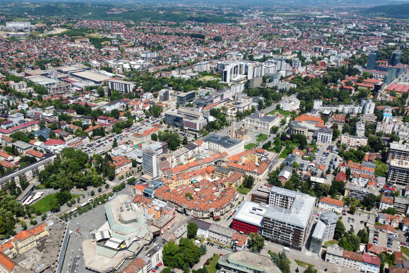
The Challenge: Renovate 34 of the city’s largest heating substationsThe Solution: Danfoss Leanheat® Monitor enables full substation digitalizationThe Results: reduced heat consumption by 10%
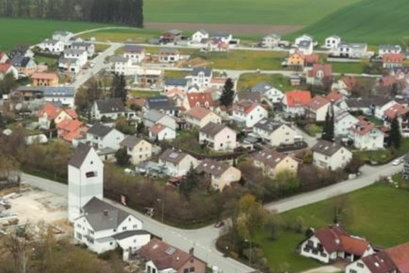
In the Wittelsbacher Land near Augsburg the local network in Eurasburg supplies heat to 80 buildings using a wood chip heating system. Danfoss’ substations ensure efficient heating in all building types, and its modern SCADA solution enables remote system monitoring and management.

Two new build apartments in Docklands, London and Newbury Racecourse, Berkshire have been equipped with intelligent Danfoss solutions, bringing increased control and stability as well as greater than 20% peak energy reduction.
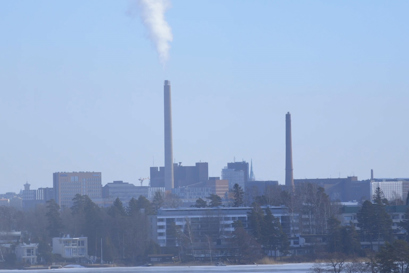
In Europe, 30 percent of all energy consumption goes to heat or cool buildings. Danfoss has the solution to lower energy usage and improve indoor climate by adding a digital element: Leanheat software.
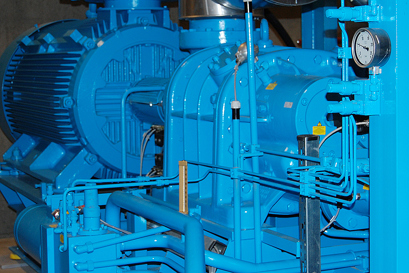
Energy efficiency was a major consideration in the design of Copenhagen’s district cooling project, where VLT® drives contribute to reducing CO2 emissions by more than 3000 t annually.
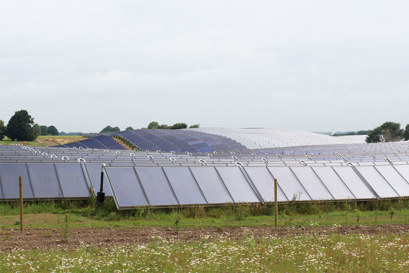
The world’s largest solar heating plant in Silkeborg, Denmark harnesses energy to heat the homes and workplaces of 40,000 citizens. It supplies 18-20% of the annual heat consumption in the city of Silkeborg, Denmark, which has an ambitious target of CO2 neutrality in heat production by the year 2030.