Efficiently controlling fluids
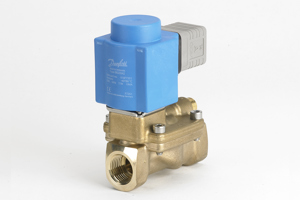
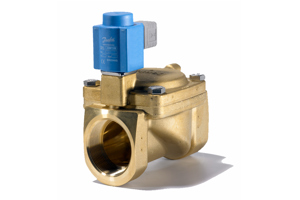
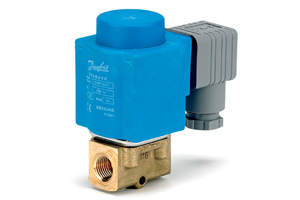
Danfoss offers an exceptionally wide range of high performance solenoid valves, available in direct-operated, servo-operated and assisted lift versions. An easy, economical way to control and regulate fluids and gases. Danfoss solenoid valve bodies and electrical coils are normally supplied separately and then combined, but the valves are also available as complete units if required.
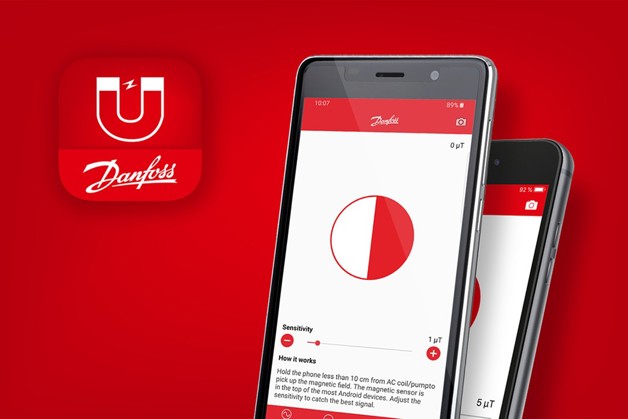
Ensuring that a solenoid valve coil is working properly, or detecting a faulty one, is an important step in many repair or installation projects.
Click to read more
We offer a general B valve series with a high capacity and the A series is more economic and compact. Danfoss solenoid valves are assembled quickly and simply without tools, providing optimum product flexibility and availability. A coil can be replaced if needed without stopping or draining the system.
Applications for solenoid valves
Our solenoid valve program includes valves for air, steam, oil, and gas, suiting a number of industrial applications that require high performance in these and other applications:
- Laundry and dry-cleaning equipment
- Industrial washing equipment
- Autoclaves/sterilizers
- Compressors and vacuum pumps
- Plastic moulding machinery
- Steam boilers
- Food processing machinery
- Sprinklers and fire fighting systems
- Dentist equipment
- Coffee machines
- Boilers
The tool is intended to make it easy for installers and end-users to specify the correct industrial solenoid valves for a range of standard applications.
Industrial valve and switch selector
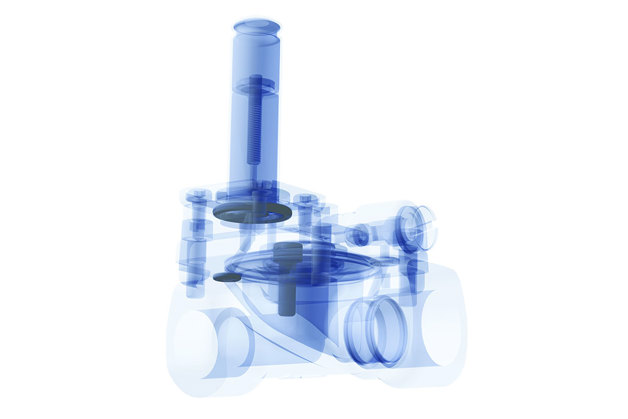
WRAS and RISE approved solenoid valves ensure your compliance. Danfoss solenoid valves are the clever choice for installers and the safe choice for drinking water.
Solenoid valves for drinking water

Features and benefits
-
Clip-on coil
-
Coil range up to IP67
-
Best water hammer damping
-
Long lifetime and high
performance -
Insensitive to dirt
-
Broad range and customized solutions
Solenoid, angle seat and thermostatic valves - a fluid control product overview.
Read brochure
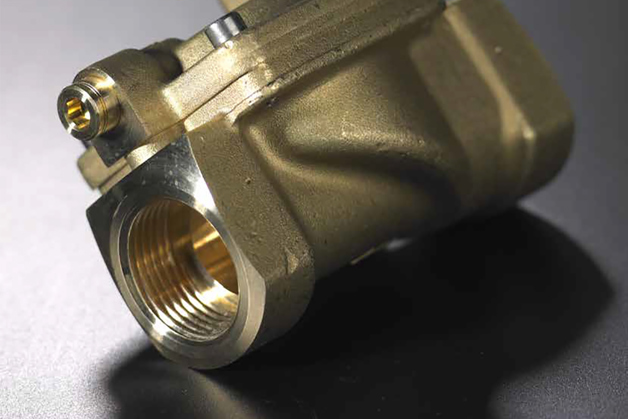
Documents
| Type | Name | Language | Valid for | Updated | Download | File type |
|---|---|---|---|---|---|---|
| Brochure | Fluid Controls overview | Finnish | Finland | 21 Dec, 2023 | 631.5 KB | |
| Brochure | Fluid Controls overview | English | United States | 22 Mar, 2022 | 410.8 KB | |
| Brochure | Fluid Controls overview | Portuguese | Brazil | 22 Mar, 2022 | 502.1 KB | |
| Brochure | Fluid Controls overview | Polish | Poland | 22 Mar, 2022 | 536.4 KB | |
| Brochure | Fluid Controls overview | Spanish, Castilian | Spain | 22 Mar, 2022 | 509.6 KB | |
| Brochure | Fluid Controls overview | French | France | 22 Mar, 2022 | 509.3 KB | |
| Brochure | Fluid Controls overview | Chinese | China | 22 Mar, 2022 | 690.4 KB | |
| Brochure | Fluid Controls overview | Korean | South Korea | 22 Mar, 2022 | 545.9 KB | |
| Brochure | Fluid Controls overview | Swedish | Sweden | 14 Feb, 2024 | 2.6 MB | |
| Brochure | Fluid Controls overview | Italian | Italy | 09 Oct, 2024 | 2.4 MB | |
| Brochure | Fluid Controls overview | German | Germany | 22 Mar, 2022 | 539.9 KB | |
| Brochure | Fluid Controls overview | Danish | Denmark | 21 Nov, 2024 | 1.1 MB | |
| Brochure | Fluid Controls Overview | Ukrainian | Ukraine | 13 Sept, 2023 | 593.6 KB | |
| User guide | How to use solenoid valves | Danish | Multiple | 10 Nov, 2015 | 1.7 MB | |
| User guide | How to use solenoid valves | Czech | Multiple | 10 Nov, 2015 | 1.8 MB | |
| User guide | How to use solenoid valves | Polish | Multiple | 29 Feb, 2016 | 3.1 MB | |
| User guide | How to use solenoid valves | Hungarian | Multiple | 22 Jan, 2016 | 3.1 MB | |
| User guide | How to use solenoid valves | Russian | Multiple | 10 Nov, 2015 | 1.8 MB | |
| User guide | How to use solenoid valves | Spanish, Castilian | Multiple | 10 Nov, 2015 | 1.7 MB | |
| User guide | How to use solenoid valves | German | Multiple | 10 Nov, 2015 | 1.8 MB | |
| User guide | How to use solenoid valves | English | Multiple | 10 Nov, 2015 | 1.7 MB | |
| User guide | How to use solenoid valves | French | Multiple | 10 Nov, 2015 | 1.8 MB |
Highlighted products

The EV220BW is an indirect servo-operated 2/2-way solenoid valve designed for drinking water and it is available in NC or NO. Valve sealings are available in EPDM, and the valve body in ECO brass or stainless steel. Wetted materials in accordance with 4MSI, DVGW, KTW – W270, and the valve program has RISE, SINTEF, WRAS, ACS and PZH approvals as well for cold and hot water applications.
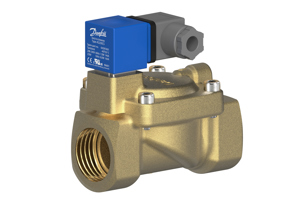
EV220W, indirect servo- operated solenoid valve. EV220W is a compact indirect servo- operated 2/2 way solenoid valves with connections from 3/8” to 2”, especially designed for use in drinking water with a WRAS approval as well as for cold and hot water applications.
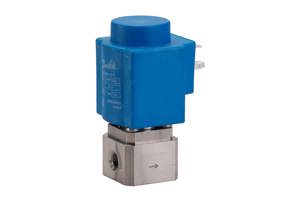
The compact 2/2-way solenoid valve EV212B with an isolating diaphragm design ensures no fluid can enter the armature area meaning the valve can be used for aggressive fluids.
Support
Learning
Case studies

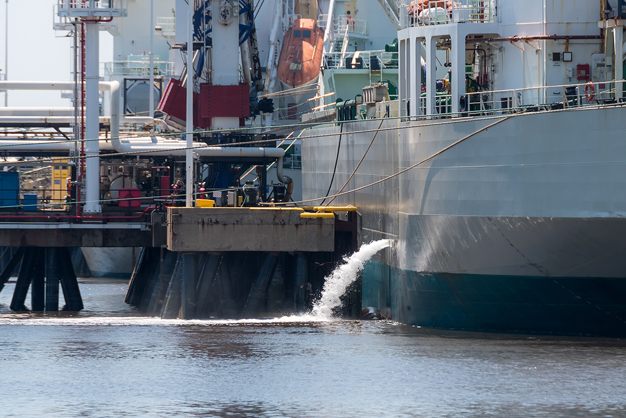
More than 90 percent of global trade is transported by sea. As a ship's cargo is unloaded and loaded, ballast water is pumped in and out to maintain the vessel's stability – this equates to around 12 billion tons every year.
Articles

Increased focus on the environmental impact from the Marine industry drives new exhaust gas emission restrictions and regulation. The new regulation forces vessel owners and shipbuilders to implement new technical solutions to ensure compliance with local, regional and global legislation.

FAQ
Troubleshooting solenoid valves – NC normally closed (armature tube is straight without dent)
Symptom: Solenoid valve does not open, no flow
Power should be on coil but valve is closed. Voltage on coil?
- If no voltage on coil:
Check coil supply: Is supply activated?
If not – supply or fuse may be defect.
Power should be on coil but valve is closed. Voltage on coil?
- If voltage on coil:
Use a magnetic detector.
Lift coil slightly and note whether it offers resistance against lifting.
Eventually use a permanent magnet.
NOTE: Never remove a coil with voltage applied for more than
2 seconds – it may burn out.
Power should be on coil but valve is closed. Correct coil / correct coil voltage?
Check to make sure the coil’s electrical requirements are the same as
the installation supply.
Diffential pressure too high for body or coil?
Check coil data. If necessary, replace coil with correct version.
Reduce differential pressure, e.g. by limiting inlet pressure.
Differential pressure too low for body?
Check valve body data and differential pressure. If necessary, replace
valve body with correct version.
Damaged / bent armature tube.
Replace valve.
Dirt / deposit blocking armature or diaphragm too stiff,
Clean orifice with needle or similar (max diameter 0.5 mm). Blow clean with compressed air. If necessary, replace defective component(s).
Dirt / deposit in pilot hole.
Clean pilot hole with a pin or needle.
Symptom: Solenoid valve partly opens, low flow
Differential pressure too low for body?
Check valve data, incl. differential pressure.
Replace valve with correct version.
Damaged or bent armature tube.
Replace valve.
Dirt at diaphragm / diaphragm damaged.
Clean diaphragm. If necessary, replace defective component(s).
Armature partly blocked / dirt or deposit in armature tube.
Clean valve. If necessary, replace defective component(s).
Symptom: Solenoid valve does not close/partly closes
Voltage remains on coil.
First lift coil slightly and note whether it offers resistance against lifting.
NOTE: Never remove a coil with voltage applied for more than
2 seconds – it may burn out
Dirt on main orifice, or on pilot orifice, or equalizing orifice in diaphragm, in armature tube or equalizing unit blocked.
Clean orifice with needle or similar (max diameter 0.5 mm).
Blow clean with compressed air.
If necessary, replace defective component(s).
Pulsation in pressure line. Differential pressure too high in open position. Pressure on outlet side periodically higher than pressure on inlet side.
Check valve data.
Check pressure and liquid flow.
Check rest of installation.
Replace valve with a more suitable alternative.
Damaged or bent armature tube
Replace valve.
Defective valve plate, diaphragm or valve seat. Dezincification, dirt, deposit or damage on main or pilot orifice.
Check pressure and liquid flow.
Replace defective component(s).
Diaphragm upside down.
Check correct installation of valve (see instruction/datasheet).
Symptom: Solenoid valve making noise
Hum (only on AC voltage 50/60 Hz)
Hum caused by AC frequency can be removed by changing to coil
with rectifier.
Inspect and clean inside armature and armature tube.
Can also be dirt or armature or spring worn out / defect (Replace valve or parts).
Water hammer when valve opens. Water hammer when valve closes
See installation guide.
Pipes very long and pipe diameter too small.
Differential pressure too high and / or pulsation in pressure line
Check valve data.
Check pressure and liquid flow.
Check for back pressure.
Check rest of installation.
Replace valve with a more suitable alternative.
Symptom: Coil burnt – melted; coil with voltage on
Incorrect voltage / frequency.
Check coil data. If necessary, change to correct coil type. Check wiring
diagram and wiring. Check maximum voltage variation:
Permissible voltage variation: +/- 10% for dual frequency;
DC and NO applications +10% / -15% for AC on single frequency
voltages.
Differential pressure too high.
Check coil data. If necessary, replace coil with correct version.
Reduce differential pressure, e.g. by limiting inlet pressure.
Coil short cut because of humidity, wrong coil IP rating, too high ambient temperature, too high media temp.
Check coil data and differential pressure and ambience temperatures
and media and check with coil and valve specifications.
Damaged / bent armature tube.
Replace valve.
Dirt at armature / armature tube / armature stuck.
Clean armature tube and armature. If necessary, replace defective
component(s).
Troubleshooting solenoid valves – NO normally open (armature tube is straight with dent)
Symptom: Solenoid valve does not open, no flow
Power should be on coil but valve is open. Voltage on coil?
- If no voltage on coil:
Check coil supply: Is supply activated?
If not – supply or fuse may be defect.
Power should be on coil but valve is closed. Voltage on coil?
- If voltage on coil:
Use a magnetic detector.
Lift coil slightly and note whether it offers resistance against lifting.
Eventually use a permanent magnet.
NOTE: Never remove a coil with voltage applied for more than
2 seconds – it may burn out.
Power should be on coil but valve is closed. Correct coil / correct coil voltage?
Check to make sure the coil’s electrical requirements are the same as
the installation supply.
Diffential pressure too high for body or coil?
Check coil data. If necessary, replace coil with correct version.
Reduce differential pressure, e.g. by limiting inlet pressure.
Differential pressure too low for body?
Check valve body data and differential pressure. If necessary, replace
valve body with correct version.
Damaged / bent armature tube
Replace valve.
Dirt / deposit blocking armature or diaphragm too stiff.
Clean orifice with needle or similar (max diameter 0.5 mm). Blow clean with compressed air. If necessary, replace defective component(s).
Dirt / deposit in pilot hole
Clean pilot hole with a pin or needle.
Symptom: Solenoid valve partly opens, low flow
Diffential pressure too low for body?
Check valve data, incl. differential pressure.
Replace valve with correct version.
Damaged or bent armature tube.
Replace valve.
Dirt at diaphragm / diaphragm damaged
Clean diaphragm. If necessary, replace defective component(s) .
Armature partly blocked / dirt or deposit in armature tube
Clean valve. If necessary, replace defective component(s).
Symptom: Solenoid valve does not close/partly closes
Voltage remains on coil
First lift coil slightly and note whether it offers resistance against lifting.
NOTE: Never remove a coil with voltage applied for more than
2 seconds – it may burn out.
Dirt on main orifice, or on pilot orifice, or equalizing orifice in diaphragm, in armature tube or equalizing unit blocked.
Clean orifice with needle or similar (max diameter 0.5 mm).
Blow clean with compressed air.
If necessary, replace defective component(s).
Pulsation in pressure line. Differential pressure too high in open position. Pressure on outlet side periodically higher than pressure on inlet side.
Check valve data.
Check pressure and liquid flow.
Check rest of installation.
Replace valve with a more suitable alternative
Damaged or bent armature tube
Replace valve.
Defective valve plate, diaphragm or valve seat. Dezincification, dirt, deposit or damage on main or pilot orifice
Check pressure and liquid flow.
Replace defective component(s)
Diaphragm upside down
Check correct installation of valve (see instruction/datasheet)
Symptom: Solenoid valve making noise
Hum (only on AC voltage 50/60 Hz)
Hum caused by AC frequency can be removed by changing to coil
with rectifier.
Inspect and clean inside armature and armature tube.
Can also be dirt or armature or spring worn out / defect (Replace valve or parts)
Water hammer when valve opens. Water hammer when valve closes
See installation guide.
Pipes very long and pipe diameter too small.
Differential pressure too high and / or pulsation in pressure line
Check valve data.
Check pressure and liquid flow.
Check for back pressure.
Check rest of installation.
Replace valve with a more suitable alternative.
Symptom: Coil burnt – melted; coil with voltage on
Incorrect voltage / frequency.
Check coil data. If necessary, change to correct coil type. Check wiring
diagram and wiring. Check maximum voltage variation:
Permissible voltage variation: +/- 10% for dual frequency;
DC and NO applications +10% / -15% for AC on single frequency
voltages.
Differential pressure too high.
Check coil data. If necessary, replace coil with correct version.
Reduce differential pressure, e.g. by limiting inlet pressure.
Coil short cut because of humidity, wrong coil IP rating, too high ambient temperature, too high media temp.
Check coil data and differential pressure and ambience temperatures
and media and check with coil and valve specifications.
Damaged / bent armature tube.
Replace valve.
Dirt at armature / armature tube / armature stuck.
Clean armature tube and armature. If necessary, replace defective
component(s).