
What are the disadvantages of static hydronic balancing?
Since the mass flows are only optimally balanced in full load cases, flow noises often occur in partial load cases, which are caused by increased flow speeds in the thermostatic valves. It is also important to remember that the full load case only occurs a few days a year and the heating system is therefore not optimally balanced for the rest of the year. Nevertheless, carrying out simple static balancing is more beneficial in terms of energy than completely omitting hydronic balancing. Our tip: The combination of "static balancing" with a high-efficiency pump with the lowest possible and constant delivery head provides a solid basis for almost any smaller residential unit.
Related products
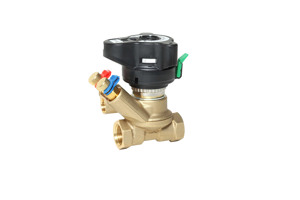
Manual balancing valves provide a static, basic balancing solution for many HVAC applications. The valves limit the flow through different parts in heating, cooling and domestic hot water systems. Since manual balancing valves can not react to changing conditions, the valves are recommended to be used in constant flow systems.
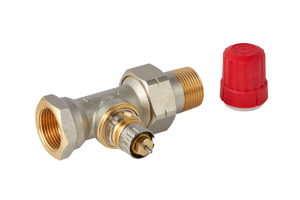
Robustly built and designed to meet the rigors of the commercial and industrial sectors, a comprehensive range of Danfoss radiator valves is available for practically all systems and installation conditions.
Click here to find documentation, software info, installation videos and guides.
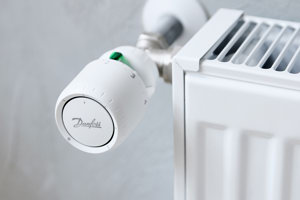
Danfoss radiator thermostats maintain constant desired room temperatures, individually room by room and help to reduce energy consumption. Mechanical thermostats or smartphone controlled thermostats - find them all here.

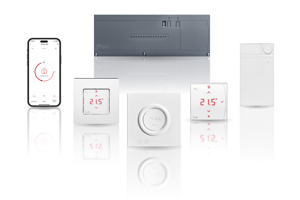
Advanced floor heating control for hydronic floor heating, designed for fast installation and to complement the interior. All underfloor heating products can be changed to Danfoss Icon2™ with all the new functions that modern underfloor heating control can offer.
Read more about other types of hydronic balancing
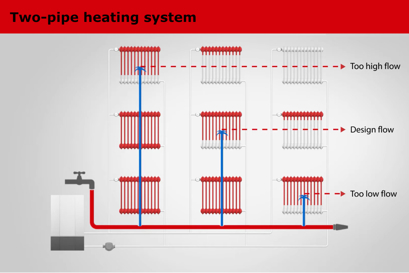
Dynamic hydronic balancing keeps the water flows and differential pressure of the heating system constant throughout the building under all load conditions and offers high energy saving potential, especially in large buildings.

Auto-balancing can be used in addition to or as an alternative to static or dynamic balancing. Auto-balancing solutions use intelligent digital system control to ideally implement complete hydronic balancing without complex pre-calculations.
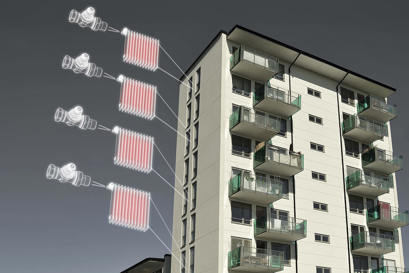
Hydronic balancing is one of the most important measures for optimizing heating systems. Although all experts are aware of this measure, it is still difficult to draw clear distinctions between its variants – static, dynamic and auto-balancing.

How to increase the energy efficiency of heating systems
With switching from natural gas to district heating or heat pump there are some aspects that you should always take into consideration.
Find out more