

Optimizing the future, building by building.
How can you ensure that your commercial buildings are energy efficient, sustainable, regulatory compliant and attractive to tenants and investors, while keeping operation costs under control?
Find out more
Three effective retrofit strategies
Unlock the potential and enhance commercial building’s performance and sustainability.
Download the ebook
Benefits
Why Retrofit
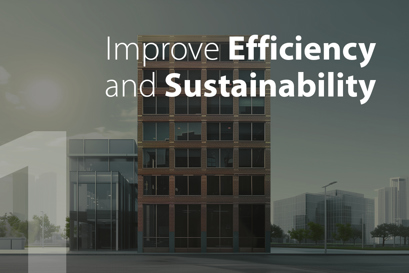
Making even small adjustments can go a long way in decarbonizing commercial buildings.
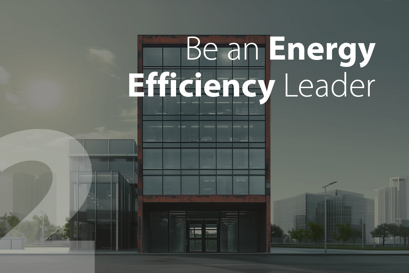
Upgrade. Our broad portfolio enables you to boost efficiency

Achieve climate goals by reducing building’s carbon footprint

Our cutting-edge solutions will empower you to outperform competitors in challenging markets

Improve energy efficiency and create comfortable places for occupants
Webinars

To meet climate targets, we must renovate buildings to improve energy efficiency. This webinar shows how to optimize primary energy use, reuse wasted energy, and optimize energy distribution in commercial and residential buildings.

Over 80% of all existing heating systems have an immense optimization potential. Retrofitting is an ideal way to unlock this potential and enhance your commercial building’s performance and sustainability.

The building sector is the EU’s largest energy consumer, using 42% of all primary energy and accounting for 36% of GHG emissions. 80% of
building energy still comes from fossil fuels. Decarbonizing buildings is crucial.

Buildings are central to our lives, with people spending 85-90% of their time indoors. Renovating buildings not only improves quality of life but also saves money, combats climate change, and reduces energy price hikes. Building Automation and Control Systems (BACS) are essential for optimizing energy use. Learn how BACS can be considered the "brain" of your building, significantly increasing efficiency and enabling smart interactions with advanced energy systems.

Retrofitting with advanced Building Automation and Control Systems (BACS) is one of the most effective ways to optimize energy use, reduce costs, and enhance indoor comfort. Discover how upgrading from on/off room control to modulating control can significantly improve energy efficiency in commercial buildings.
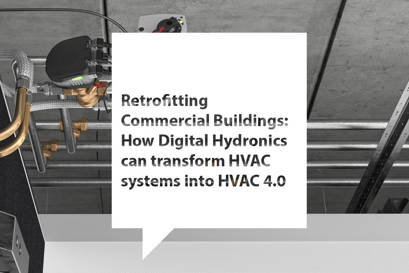
Retrofitting commercial buildings with Danfoss Digital Hydronics enhances system efficiency and performance. It offers seamless integration of hydronic balancing with precise temperature control, utilizing pressure-independent control valves and digital actuators. By incorporating Building Automation and Control Systems (BACS), this advanced connectivity transforms traditional HVAC systems into HVAC 4.0 through data-driven control. NovoCon® digital actuators play a key role in optimizing system operations.

Explore the key trends shaping the future of HVAC within buildings. With buildings consuming 42% of the EU's energy, discover how energy retrofits can drive sustainability beyond regulations. Learn how Danfoss solutions support compliance and digitalization, enabling data-driven decisions for a net-zero energy system.
Contact us
Case stories
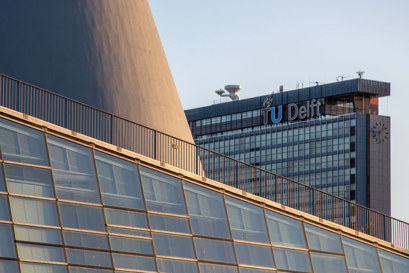
Delft University of Technology (TU Delft) aims to achieve a carbon neutral, circular and climate adaptive campus by 2030. One of the keys to realizing this ambitious goal is the university’s geothermal project, which will provide sustainable heating to both the campus and approximately 6,000 households in Delft.

Hotels across Southeast Europe are scaling down their use of burner oil as a heat source for their Domestic Hot Water (DHW) boilers, instead adopting renewable alternatives such as heat pumps or district heating.
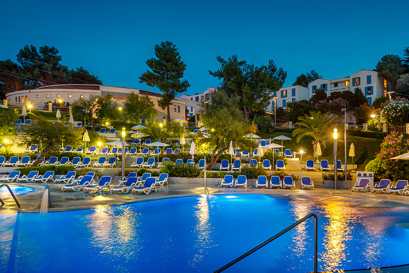
At any hotel, guest satisfaction is a top priority, and ensuring that rooms are a comfortable temperature is key to keeping customers
happy.
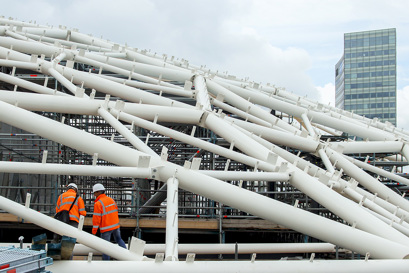
The challenge? Gaining BREEAM credits for energy monitoring at the new multi-tenant, healthy & smart office EDGE Amsterdam West
(The Netherlands) and a fast and fail free installation thanks to smart digital actuators.
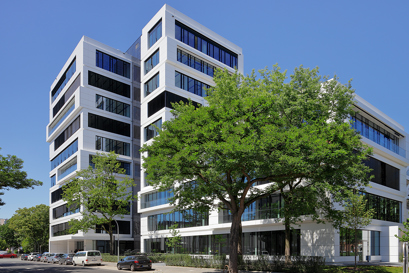
One of the important requirements for the building owner was to obtain a certification from the DGNB (German Sustainable Building
Council). Furthermore, the layout for the new office spaces inside the ten-story building were unknown and required a high level of flexibility to fulfill the wishes of future renters.

A high-end HVAC system, LED lighting and other technical improvements established a smart and modern office environment. It lives up to the highest customer, energy efficiency and indoor comfort demands.

The challenge? Gaining BREEAM credits for energy monitoring at the new multi-tenant, healthy & smart office EDGE Amsterdam West
(The Netherlands) and a fast and fail free installation thanks to smart digital actuators.
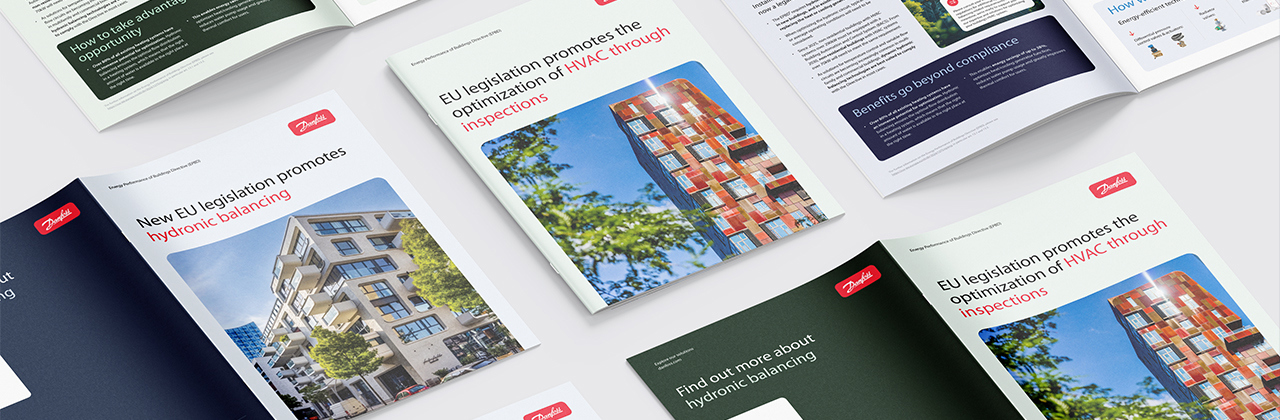
New EU legislation
The EU's revised Energy Performance of Buildings Directive (EPBD) mandates hydronic balancing in new and renovated buildings to improve energy efficiency and comfort. This means new heating/cooling systems must be balanced from the start, and existing systems must be balanced when the heat or cooling generator is replaced. The legislation also requires buildings over a certain size to have Building Automation and Control Systems (BACS) to optimize performance, which is increasingly relevant for dynamic hydronic balancing solutions.
Learn more
Related solutions
HVAC Solutions
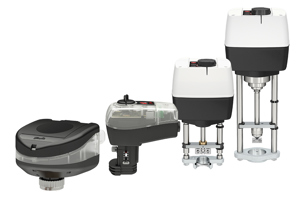
To take advantage of the combined balancing and control features of Danfoss AB-QM it has to be equipped with actuators controlled by room thermostats or a Building Management System. Danfoss offers a broad range of actuators varying from thermal on-off to digital step motor actuators with bus communication.
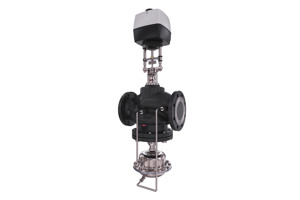
Pressure independent control valves ensure efficient control, delivered in a simple way.
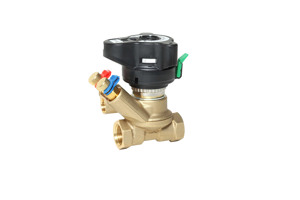
Manual balancing valves provide a static, basic balancing solution for many HVAC applications. The valves limit the flow through different parts in heating, cooling and domestic hot water systems. Since manual balancing valves can not react to changing conditions, the valves are recommended to be used in constant flow systems.
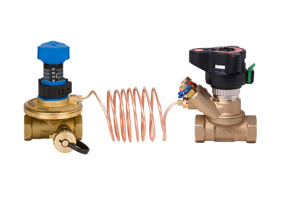
Differential pressure control valves provide a dynamic balancing solution for HVAC applications. The valves eliminate pressure fluctuations occurring in variable flow systems, such as two-pipe radiator systems, at partial load conditions. These types of valves can also be used in floor heating and comfort cooling applications.
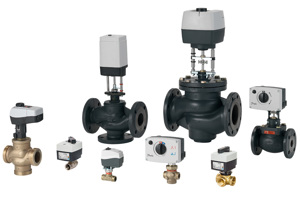
Motorized control valves ensure perfect control and efficiency for every building and application. Danfoss Motorized Control Valves (MCV) for district heating and cooling, HVAC and central heating systems ensure stable and accurate control of water, glycol mixtures and steam.
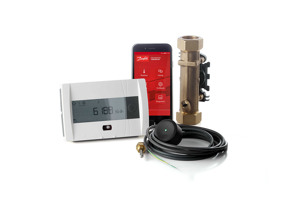
Danfoss Sono® ultrasonic energy meters can be used to identify what amount of heating or cooling energy a house, apartment or building has consumed. These compact meters include an energy calculator to read out the consumption. Danfoss offers meters for heating and cooling applications, for primary and secondary side installation.
Radiator thermostats

Robustly built and designed to meet the rigors of the commercial and industrial sectors, a comprehensive range of Danfoss radiator valves is available for practically all systems and installation conditions.
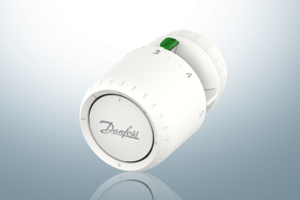
Find Danfoss' range of mechanical radiator thermostats, leveraging 80 years of experience to offer superior temperature precision and control.
Stations
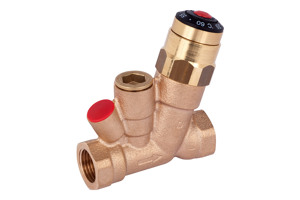
Thermal balancing valves provide a dynamic, temperature based, balancing solution for domestic hot water applications. The valves optimize the temperatures in DHW systems having constant hot water circulation. As result heat losses and risk of legionella are significantly reduced.
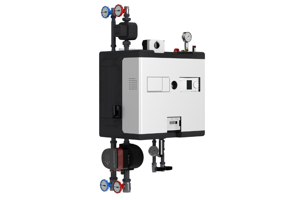
Substations are house heating systems or units in apartments that handle heat transfer from district heating pipes into your home to get hot water and heat on demand.
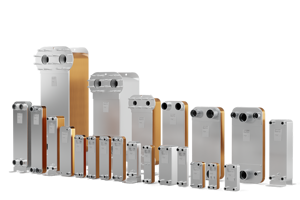
The performance of the Brazed Plate Heat Exchanger (BPHE) has been proven through 30 years of constant development, ensuring unparalleled efficiency for all applications.
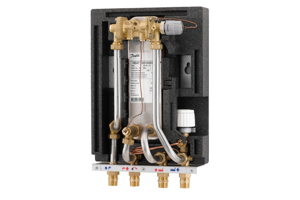
The instantaneous water heaters are suitable for smaller households, as they provide hot water when you need it - you get instant hot water. Compared to storage water heaters they do not generate standby energy losses and can therefore save you money.
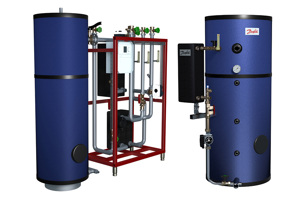
Domestic hot water systems with water tank are solutions suitable for centralized installations for hot water preparation, such as hospitals, hotels sports arenas, apartment blocks and similar large buildings. The product range covers storage and charge systems which all combine the demand for high performance, comfort, hygiene and resource efficient operation.